Carvana Co. (NYSE: CVNA) saw its stock price collapse more than 20% in after-hours trading Wednesday, February 18, 2026, after the online used-car retailer delivered a classic "mixed bag" fourth-quarter earnings report. While revenue smashed expectations and the company posted record full-year results, a key profitability metric fell short of Wall Street's targets, triggering a massive sell-off that erased a 3% gain from the regular trading session. The dramatic reaction highlights the intense scrutiny growth stocks face when profitability trajectories appear to waver, even amid otherwise stellar operational performance.
How the Earnings Story Unfolded: Revenue Surge vs. Profitability Pressures
Carvana's fourth-quarter results presented investors with a stark contrast between top-line strength and bottom-line concerns. The company reported revenue of $5.60 billion, a remarkable 58% increase year-over-year that comfortably exceeded the consensus analyst estimate of $5.26 billion. This revenue surge was driven by 43% growth in retail units sold, demonstrating continued strong demand for Carvana's online car-buying platform. The company also reported earnings per share of $4.22, though this figure requires careful comparison due to non-recurring items.
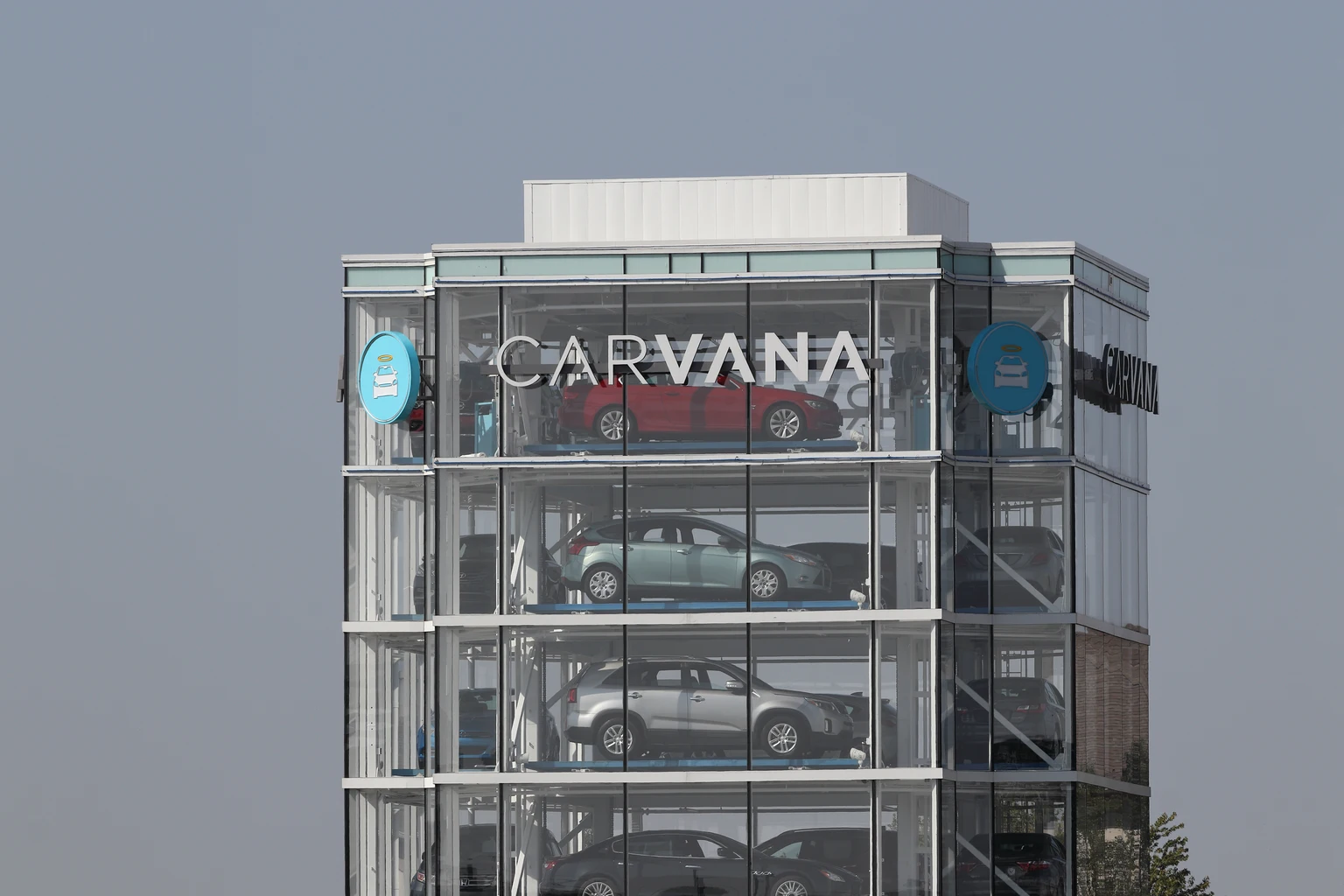
However, the market's focus zeroed in on Carvana's adjusted EBITDA (earnings before interest, taxes, depreciation, and amortization), which came in at $511 million—missing the consensus estimate of approximately $536 million. This $25 million shortfall on a key profitability metric represented a margin compression that worried investors who have been monitoring Carvana's path to sustainable profitability. The adjusted EBITDA margin of 9.1% declined from 10.1% in the year-ago period, reflecting higher reconditioning and logistics costs amid the company's rapid expansion.
Timeline: The Carvana Earnings Roller Coaster
The sequence of events surrounding Carvana's earnings release created textbook market volatility. During regular trading on Wednesday, February 18, CVNA stock climbed 3% to close at $361.53, suggesting optimistic sentiment heading into the earnings announcement. After the market closed at 4:00 PM ET, Carvana released its fourth-quarter results at approximately 4:05 PM ET. Within minutes, the stock began its precipitous decline in after-hours trading, eventually sinking more than 20% to around $290 per share.
By Thursday morning's pre-market session, the decline had moderated slightly, with shares trading down approximately 9.8% to $326.24 ahead of the regular market open. This volatility pattern is characteristic of high-growth stocks where earnings reports serve as crucial validation points for investor theses, with any deviation from expectations triggering amplified price movements.
Why Wall Street Is Concerned: Analyst Reactions and Price Target Cuts
The market's negative reaction wasn't merely about a single metric miss—it reflected deeper concerns about Carvana's profitability trajectory amid rising costs. Several prominent Wall Street firms responded by slashing their price targets while maintaining generally positive ratings on the stock. BTIG analyst Marvin Fong maintained a Buy rating but lowered his price target from $535 to $455, emphasizing that unit growth remains more important to Carvana's long-term story than near-term margin fluctuations.
Bank of America Securities analyst Michael McGovern also maintained a Buy rating but reduced his price target from $460 to $400, citing the adjusted EBITDA miss and concerns about gross profit per unit (GPU) pressures. Deutsche Bank analyst Lee Horowitz maintained his Buy rating while cutting his price target from $600 to $519, noting that while profitability metrics disappointed, Carvana's strong revenue growth and market share gains remain intact. These coordinated price target reductions, averaging approximately 15% across the three firms, signal that analysts are recalibrating their expectations for Carvana's near-term profitability while maintaining confidence in the company's long-term growth story.
Where Things Stand Now: Current Market Position and Valuation
As of Thursday morning, February 19, 2026, Carvana shares were trading around $326 in pre-market activity, representing a market capitalization of approximately $47 billion. This places the stock roughly 30% below its 52-week high of $486.89 reached earlier in 2025, but still significantly above its 52-week low of $148.25. The dramatic sell-off reflects the heightened sensitivity of growth stock valuations to any signs of decelerating profitability metrics, particularly for companies like Carvana that have experienced massive valuation expansions in recent years.
The company's full-year 2025 results provide important context for the current valuation. Carvana achieved record retail unit sales of 596,641 vehicles (up 43% year-over-year), record revenue of $20.3 billion (up 49%), and record net income of $1.9 billion. These achievements represent remarkable progress for a company that was facing existential questions just a few years earlier, highlighting both the transformative potential of Carvana's business model and the elevated expectations now embedded in its stock price.
What Happens Next: Carvana's 2026 Outlook and Strategic Direction
Looking forward, Carvana management has provided guidance that anticipates "significant growth in both retail units sold and Adjusted EBITDA in full year 2026, including a sequential increase in both retail units sold and Adjusted EBITDA in Q1." This forward-looking statement suggests the company views the fourth-quarter profitability pressures as temporary rather than structural, though investors will undoubtedly monitor upcoming quarters closely for evidence supporting this optimism.
The company plans to ramp up its focus on "driving significant profitable growth at scale" throughout 2026, indicating a continued balance between expansion and profitability improvement. Carvana's ability to execute on this dual mandate—maintaining robust revenue growth while expanding margins—will likely determine whether the stock can recover from its post-earnings decline and resume its upward trajectory. The coming quarters will be critical for assessing whether the fourth-quarter margin compression represents a temporary operational hiccup or the beginning of a more challenging profitability environment.
The Bottom Line: Key Points for Investors
Carvana's earnings reaction exemplifies the high-wire act that growth stocks must perform—delivering not just strong revenue growth but also meeting precise profitability expectations. While the company's fundamental growth story remains intact with record vehicle sales and revenue, the market's intense focus on margin metrics creates near-term volatility. For long-term investors, the key question is whether Carvana's profitability miss represents a temporary operational issue or a more fundamental challenge to its unit economics. The company's guidance for sequential improvement in 2026's first quarter will be closely watched, and the stock's recovery will likely depend on demonstrating that the fourth-quarter margin compression was indeed an anomaly rather than a new trend.