Cerebras Systems, the AI chipmaker known for building the world's largest processor, priced its initial public offering at $185 per share on Wednesday evening, raising $5.55 billion in the biggest US tech IPO since Snowflake's debut in 2020. The company begins trading on the Nasdaq on Thursday under the ticker symbol CBRS with a fully diluted valuation of $56.4 billion.
The pricing blew past the company's originally guided range of $115 to $125 per share, which was itself raised to $150 to $160 just days ago as demand from institutional investors surged. Cerebras sold 30 million shares in the offering, up from the initial plan of 28 million shares, with underwriters holding an option to purchase an additional 4.2 million shares.
Inside the Heaviest AI IPO of 2026
Cerebras filed confidentially for its IPO in late February 2026, then publicly refiled on April 17 at a valuation target of $26.6 billion. What transformed the deal from a solid tech IPO into a blockbuster was a January 2026 contract with OpenAI — a multi-year agreement for 750 megawatts of inference capacity, expandable to two gigawatts by 2030. The contract carries a value exceeding $10 billion at signing and was disclosed in the S-1 as a binding master relationship agreement potentially worth over $20 billion at full expansion.
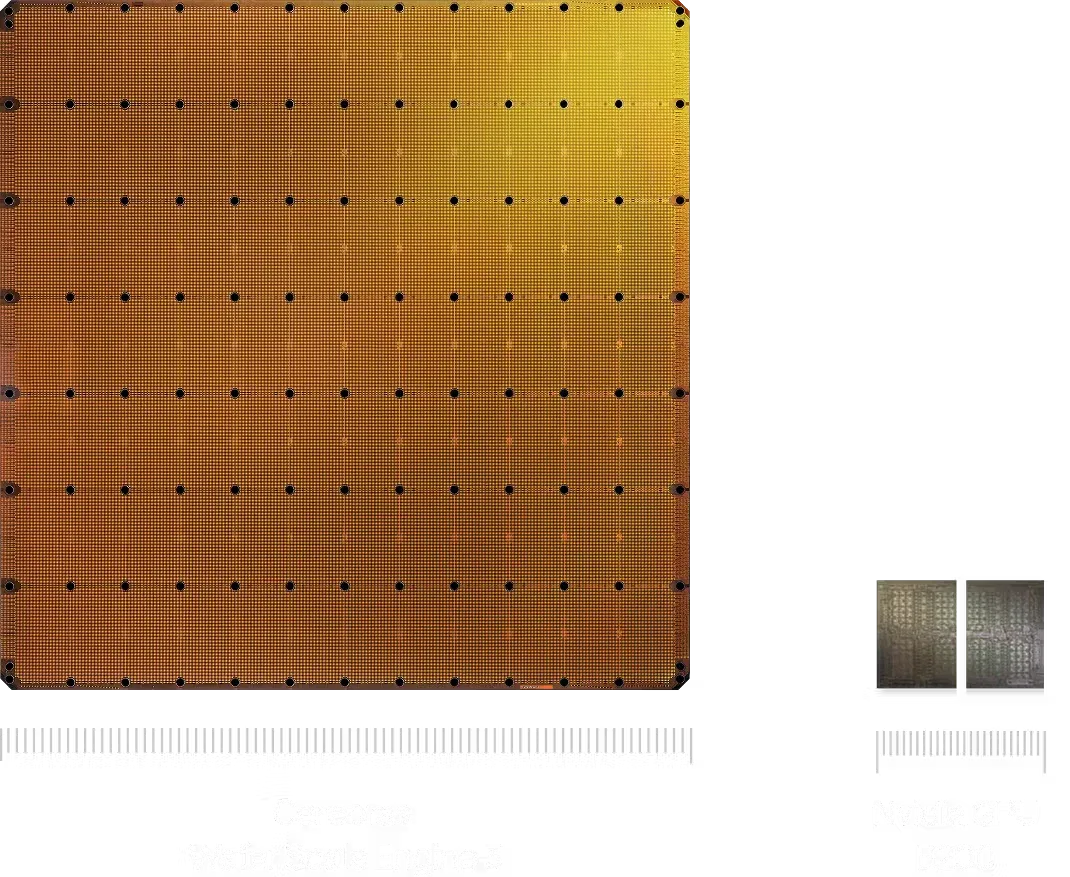
The Sunnyvale, California-based company designs the Wafer-Scale Engine 3 (WSE-3), a single piece of silicon the size of a dinner plate containing 4 trillion transistors and 900,000 AI-optimized cores. At 46,225 square millimeters, it is 58 times larger than a leading GPU chip and delivers 125 petaflops of AI compute. The pitch to investors is that Cerebras dominates AI inference — the workload where AI models run rather than train — while Nvidia still leads the training market.
Morgan Stanley, Citigroup, Barclays, and UBS Investment Bank served as lead book-running managers. The co-founder and CEO Andrew Feldman did not sell any shares in the offering, a signal of confidence that resonated with the institutional investors who pushed pricing through the top of the range.
Timeline: How Cerebras Went From Filing to the Biggest IPO of the Year
The road to the Nasdaq trading floor was a rapid five-week sprint. After filing confidentially in late February 2026, Cerebras publicly submitted its S-1 registration statement with the SEC on April 17, targeting a $26.6 billion valuation and seeking to raise approximately $3.5 billion. The company officially launched its IPO roadshow on May 4 with a price range of $115 to $125 per share. By early the following week, demand was so strong that the range was raised to $150 to $160. On Wednesday, May 13, the company priced at $185 — well above the revised range — raising $5.55 billion. Trading commenced on the Nasdaq Global Select Market on Thursday, May 14.
The IPO was not without hurdles. Cerebras had initially filed for an IPO in 2024, but the process stalled when the Committee on Foreign Investment in the United States (CFIUS) opened a review of G42's minority stake in the company. The Abu Dhabi-based AI conglomerate had invested heavily in Cerebras, and the national security review forced the company to withdraw its earlier filing. The 2026 refile cleared after G42's holding was restructured into non-voting shares.
Why the Cerebras IPO Matters for AI Investing
Cerebras' financial story is as steep as its chip is large. Revenue grew from just $24.6 million in 2022 to $290.3 million in 2024, then surged to $510 million in 2025 — representing 76% year-over-year growth and a more than six-fold increase over two years. The company's net losses, however, remain substantial, as is typical for high-growth semiconductor companies investing heavily in R&D and manufacturing.
The biggest risk factor flagged by analysts is customer concentration. G42 and the Mohamed bin Zayed University of Artificial Intelligence, treated as a single related-party group, accounted for roughly 86% of Cerebras' 2025 revenue. The OpenAI contract is the structural answer to that concern — adding a second marquee name to the customer list. But as one analyst noted, it also creates a different kind of concentration, with three buyers effectively carrying the revenue model.
At $56.4 billion, the valuation represents roughly 110 times 2025 revenue — a multiple that reflects both the AI hype cycle and the scarcity value of a pure-play AI chip company going public in a market dominated by Nvidia. The float is a smaller percentage of the company than is typical for an IPO of this size, which combined with overwhelming demand helped push the valuation from $26.6 billion in April to $56.4 billion at pricing in just five weeks.

Where Things Stand Now: Cerebras Begins Trading on Nasdaq
Cerebras CEO Andrew Feldman rang the Nasdaq opening bell in Times Square on Thursday morning, marking the official start of public trading. The stock opened to significant investor interest, with pre-market indicators suggesting strong demand. The company's listing on the Nasdaq Global Select Market under CBRS comes at a time when AI mania continues to grip Wall Street, with investors hungry for new ways to gain exposure to the artificial intelligence boom beyond the usual suspects.
The underwriting syndicate — which included Mizuho, TD Cowen, Needham & Company, Craig-Hallum, Wedbush Securities, Rosenblatt, Academy Securities, Credit Agricole CIB, MUFG, and First Citizens Capital Securities — exercised their greenshoe option to purchase additional shares, reflecting the oversubscribed nature of the offering.
What Happens Next as Cerebras Faces the Public Markets
The transition from private to public marks a new chapter for Cerebras. As a private company, it could sell a thesis story about wafer-scale silicon and AI inference dominance. As a public company, it now has to deliver quarterly results. The OpenAI contract provides a powerful answer to customer-concentration questions, but the next four quarters will determine whether wafer-scale silicon is a category-defining technology or a niche product.
Industry observers will be watching for customer diversification beyond G42 and OpenAI, gross margin trends as manufacturing scales, and whether the WSE-3 can maintain its competitive edge against Nvidia's next-generation offerings. For the investors who got in at the IPO price of $185, the bet is that Cerebras can carve out a durable position in the AI infrastructure stack — and that the biggest chip on earth can deliver returns to match its size.
Key Takeaways from the Cerebras IPO
- Cerebras priced its IPO at $185 per share, raising $5.55 billion at a $56.4 billion valuation — the largest US tech IPO since Snowflake
- Shares began trading on the Nasdaq on May 14, 2026 under the ticker CBRS
- Revenue hit $510 million in 2025, up 76% year-over-year, driven by demand for AI inference chips
- A $10+ billion contract with OpenAI, signed in January 2026, was the catalyst that supercharged the offering
- Customer concentration remains a risk: G42 accounted for approximately 86% of 2025 revenue
- CEO Andrew Feldman did not sell any shares in the IPO, signaling confidence in the company's trajectory
- The WSE-3 chip contains 4 trillion transistors and is 58 times larger than a leading GPU — a technological moat the company hopes will sustain its competitive advantage