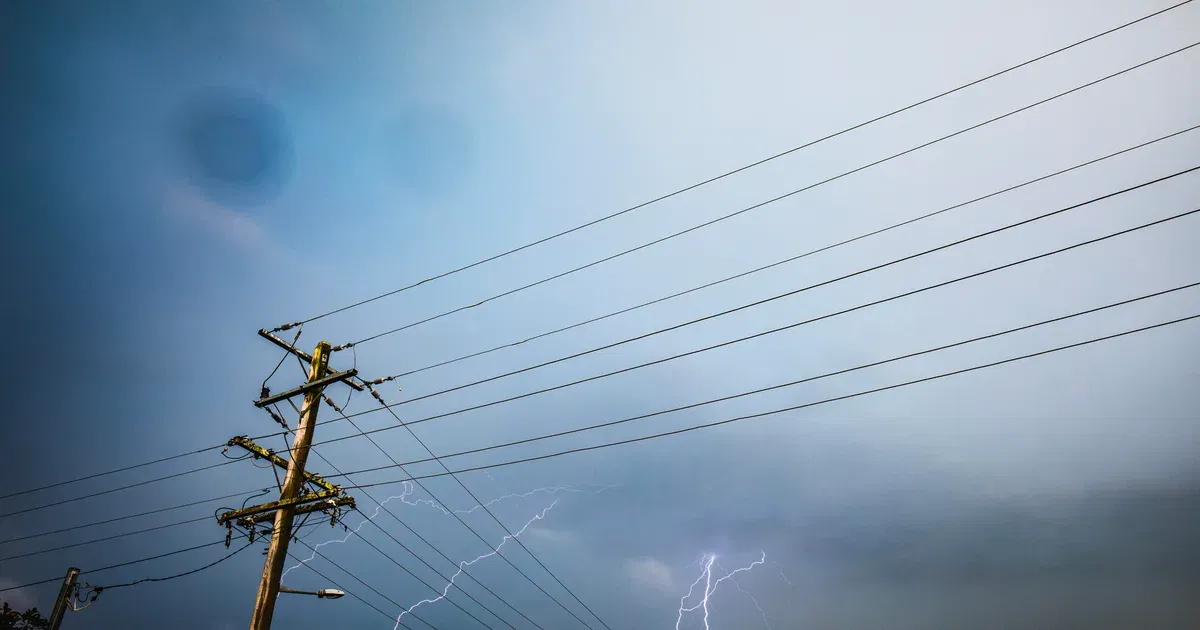
The DTE outage map lit up across Southeast Michigan this week as a punishing line of thunderstorms knocked out electricity for more than 300,000 customers — and for investors, the surge in searches for the map is about far more than downed trees and darkened neighborhoods. The blackout landed squarely on top of the question Wall Street has been pressing DTE Energy (NYSE: DTE) to answer for years: whether the utility's multibillion-dollar push to harden its grid is actually delivering the fewer, shorter outages that Michigan regulators and ratepayers have been demanding.
With DTE shares trading near $136 and the company pouring more than $900 million into electric reliability in just the first half of 2026, a storm event of this scale is a real-time stress test of the company's investment thesis — one that investors and analysts will be watching closely in the days ahead.
How 300,000 Michigan Customers Lost Power in 24 Hours
The storms began Wednesday night, September 2, and returned with a second, more destructive wave on Thursday afternoon, September 3. By Thursday evening, DTE's outage map showed roughly 303,000 customers without service, according to FOX 2 Detroit, while CBS News Detroit reported more than 265,000 active power interruptions as of 11 p.m. The hardest-hit areas were concentrated in Oakland and Wayne counties, with Livingston County also suffering significant damage.
Wind gusts reached as high as 70 mph in Howell and 51 mph at Detroit City Airport as the storms rolled through. The damage was widespread: a tree fell on a house in Madison Heights, flooding temporarily shut down lanes on eastbound I-94 near Gratiot Avenue, traffic lights went dark at intersections across the region, and several schools closed. For perspective, the event far outstripped the aftermath of severe weather on July 3, which left about 168,000 customers without power.
DTE, which provides electricity to about 2.3 million customers in Southeast Michigan, mobilized more than 3,400 Storm Response Team members, including hundreds of field workers brought in from outside Michigan. The utility said it had already restored power to nearly 70,000 customers affected by Wednesday night's storm before Thursday's second wave of severe weather, with winds up to 60 mph, triggered another round of outages.
Timeline: From First Storm to a Region-Wide Blackout
Here is how the outage unfolded across Southeast Michigan:
- Wednesday night, Sept. 2: A first line of intense thunderstorms moves through the region, knocking out power to tens of thousands of customers.
- Thursday morning, Sept. 3: DTE reports more than 100,000 homes without power and says roughly 2,600 response team members, including 400 out-of-state lineworkers, have been deployed.
- Thursday afternoon: A second, more severe round of storms — with wind gusts up to 60-70 mph — sweeps the region, pushing the outage count past 200,000 and then beyond 300,000.
- Thursday evening: DTE's outage map shows about 303,000 customers without power, and the utility says there is no firm timeline for full restoration.
- Friday, Sept. 4: More than 277,000 DTE and Consumers Energy customers combined remain without power as restoration crews work around the clock.
Why the DTE Outage Map Matters for Investors
For a utility investor, an outage map is more than a customer-service tool — it is a window into the return on capital that underpins the entire regulated-utility model. DTE Energy has spent aggressively to modernize its grid, and the September storm is the clearest test yet of whether that spending is translating into measurable results.
The numbers are substantial. In the first half of 2026, DTE invested more than $2.6 billion across its electric and gas utilities, including over $900 million aimed specifically at improving electric reliability through infrastructure rebuilds, tree trimming and smart-grid technology. In February 2026, the Michigan Public Service Commission approved an additional $242.4 million for DTE Electric to continue upgrading its distribution system and maintain a more aggressive tree-trimming cycle (Case No. U-21860).
The company's second-quarter 2026 results, reported July 28, showed earnings of $282 million, or $1.35 per diluted share, up from $229 million, or $1.10 per share, a year earlier. Smart-grid technology alone, DTE said, prevented more than 49,000 outages in the first half of the year and more than 90,000 since the program launched in 2023.
"As energy demand increases, we are meeting the moment by making responsible investments that strengthen our infrastructure and deliver real value and affordability for our customers," said Joi Harris, DTE Energy's president and CEO, in announcing the quarterly results.
Yet the September blackout underscores a tension at the heart of the DTE investment story. The company has told investors it plans to pause future electric rate requests until at least 2028 — provided its first data-center project comes online by the end of 2027 — betting that new commercial load will help fund reliability improvements without leaning as heavily on residential ratepayers. A major storm event that leaves hundreds of thousands in the dark can test that narrative, especially in a state where utilities are required by law to credit customers $42 per day for long-duration outages.
Where Restoration Stands Now
As of the latest updates, DTE had more than 3,400 crews in the field working to restore service, but the utility has not committed to a full restoration timeline following Thursday's second wave of storms. The company said its Storm Response Teams restored nearly 70,000 customers from the first round before the second hit, and it continues to urge residents to stay at least 25 feet from downed lines and report hazards through the outage map at outage.dteenergy.com.
For affected customers, Michigan's outage-credit rules mean compensation could come into play: under state law, customers qualify for a $42 daily credit after 16 hours without power under normal conditions, 48 hours under "gray-sky" conditions affecting 1% to 10% of a utility's customers, or 96 hours during catastrophic events affecting 10% or more of customers.
What's Next for DTE Energy and Its Shareholders
Looking ahead, the September storm will be measured against the reliability improvements DTE has promised — and paid for. Investors will be watching how quickly service is restored, whether the event triggers renewed regulatory scrutiny, and whether the episode influences the company's rate-case strategy and its earnings guidance.
DTE shares finished Wednesday at $136.05, down just one cent on the session after trading in a range between $134.35 and $136.39, putting the company's 2026 guidance at roughly 17.8 times earnings. The utility's long-term growth story — anchored by grid hardening, the $1.6 billion battery-storage partnership with LG Energy Solution Vertech, and rising data-center demand — remains intact, but each high-profile outage adds pressure to demonstrate that the reliability spending is delivering measurable results.
The Bottom Line for Investors
- Severe storms knocked out power for more than 300,000 DTE customers across Southeast Michigan on September 3, 2026.
- DTE has invested over $900 million in electric reliability this year alone and received $242.4 million in additional grid-upgrade funding from Michigan regulators in February.
- The event is a live stress test of DTE's reliability spending and its pledge to pause rate requests until at least 2028.
- Michigan law entitles customers to $42-per-day outage credits, a factor that can shape regulatory and financial outcomes.
- DTE stock, near $136 with guidance at roughly 17.8 times earnings, will be judged on how quickly the grid bounces back.