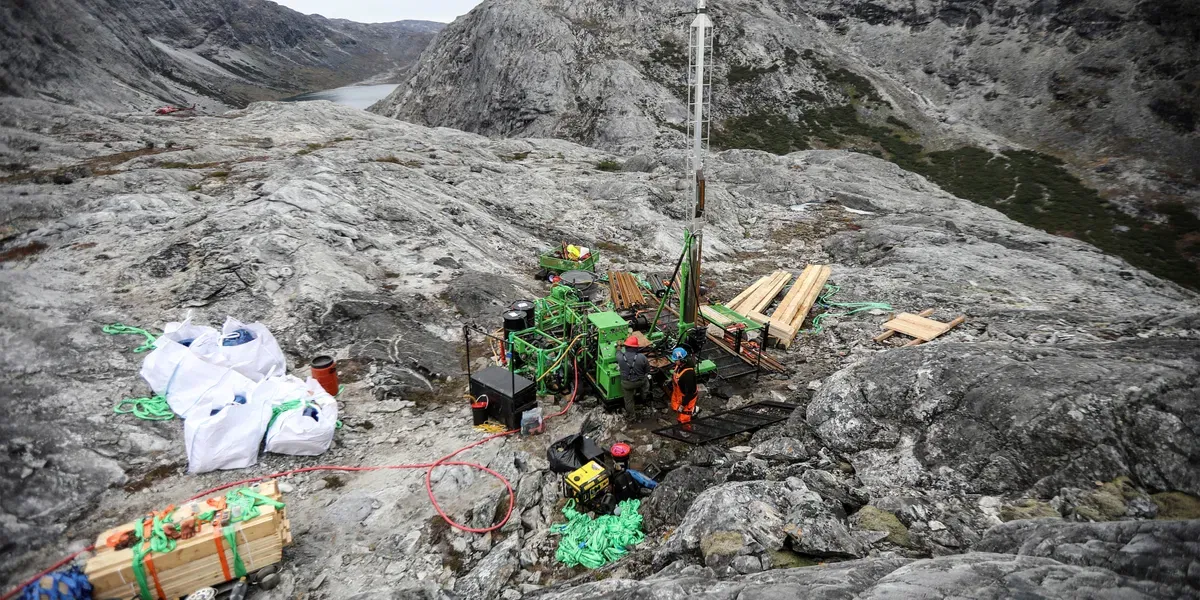
Greenland is no longer just a remote island at the top of the map — it has become one of the most closely watched natural-resource investment stories on the planet. When Donald Trump floated buying the autonomous Danish territory in 2019, he dismissed the idea as "essentially a large real estate deal." But investors and analysts now argue the real money isn't in acquiring Greenland's land — it's in developing what sits beneath it: some of the largest untapped rare earth, graphite, and critical mineral deposits outside of China.
The renewed U.S. push for Greenland, which intensified after the 2024 election, has thrust the island's mineral wealth into the spotlight. For investors, the question is no longer whether Greenland's resources matter, but how to position for a critical minerals boom that could reshape global supply chains for electric vehicles, wind turbines, and defense technology.
The 42 Million-Tonne Question: What's Buried Under Greenland
Greenland is home to deposits of rare earth elements such as neodymium, along with graphite, lithium, uranium, zinc, iron, nickel, and cobalt — the raw inputs needed for electric vehicle batteries, wind turbines, and transmission lines. The Geological Survey of Denmark and Greenland estimates the island could hold up to 42 million tonnes of rare earth oxides, which would make it the world's second-largest holder of rare earth reserves, ahead of Vietnam, Brazil, and Russia.
Its graphite story is even more striking. Greenland's roughly 6 million tonnes of known graphite resources could, on their own, exceed the projected global electric vehicle demand for 2040. That matters because China currently dominates the market, producing roughly 82 percent of the world's natural graphite and about 60 percent of processed rare earth elements, while supplying 72 percent of U.S. rare earth compound imports and essentially all of Europe's heavy rare earth supply.
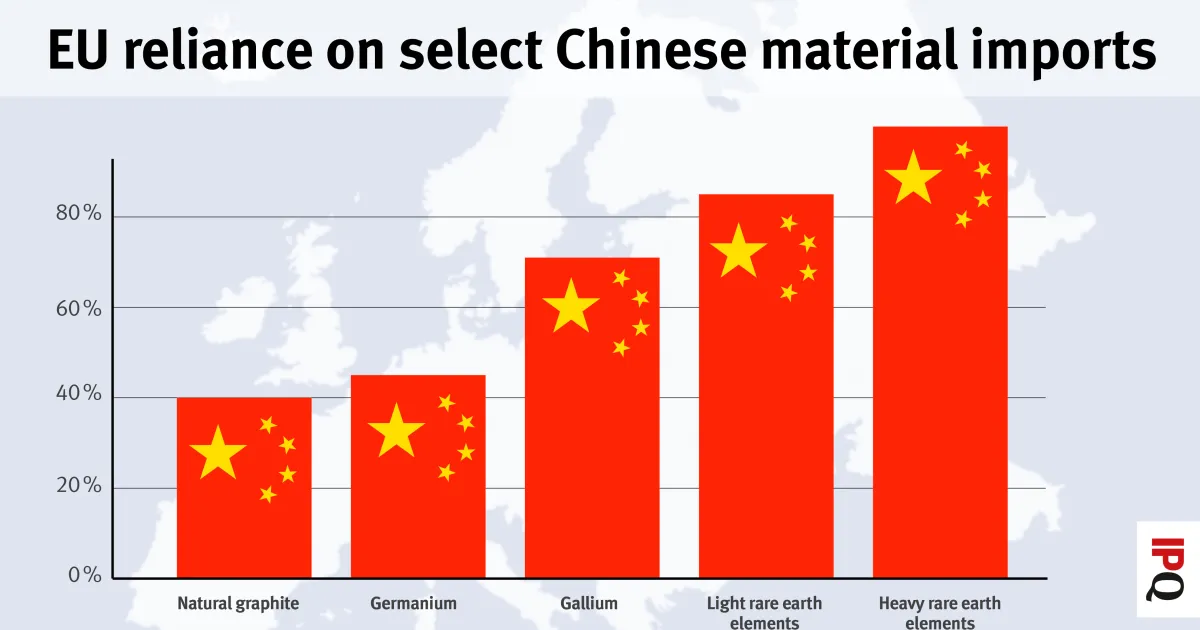
This concentration has made Western governments nervous. China's 2023 graphite export restrictions — retaliation for U.S. semiconductor limits — were a preview of how mineral supply chains can be weaponized. Greenland, with its stable political environment and secure Atlantic sea lanes to both North American and European markets, has emerged as the most obvious Western alternative.
How the Greenland Story Went From "Real Estate Deal" to Hedge Fund Thesis
The United States has eyed Greenland for more than a century. In 1946, Washington offered Denmark $100 million for the island, and Denmark refused. Nelson Rockefeller floated acquiring it for its mining potential in the 1970s. Trump first raised the idea in 2017 and again in 2019, when his offer was dismissed by Danish and Greenlandic leaders.
The story changed after the 2024 election. By January 2025, Trump was again signaling interest in Greenland — and this time the conversation had shifted from buying territory to securing its minerals. Reuters reported that U.S. officials had lobbied the developers of Greenland's Tanbreez rare earth project not to sell to China, a clear signal that Washington now treats the island's deposits as a strategic asset. Meanwhile, the EU signed a strategic minerals partnership with Greenland in November 2023 and launched a €22.5 million Green Growth program in early 2024.
Why Greenland Could Rewrite the Global Rare Earth Trade
The investment case for Greenland rests on a simple supply-demand mismatch. The International Energy Agency projects demand for graphite will grow 25-fold from electric vehicle manufacturing alone, while rare earth demand continues to climb with the energy transition. At the same time, Western policymakers are actively trying to "friend-shore" supply chains away from China through initiatives like the Minerals Security Partnership.
Greenland ticks the boxes: it has the resources, a pro-mining political class (all seven parties in parliament support developing the sector), and increasingly deep backing from U.S. and European development finance. The U.S. Export-Import Bank has already helped fund the Citronen zinc project, and Washington opened a consulate in the capital Nuuk in 2020.
Yet the barriers are real. Greenland has fewer than 100 miles of paved roads, a population of just 57,000, and only two operating mines — neither of which currently extracts critical minerals. A 2021 ban on uranium above 100 parts per million also complicates rare earth projects like Kvanefjeld, where uranium is found alongside the valuable metals. And as of 2021, none of the 41 companies holding exploration or mining licenses in Greenland were U.S.-owned.
The Developers Already Positioned in Greenland
For investors, the most direct exposure comes through a small group of developers. Critical Metals Corp., which trades on Nasdaq under the ticker CRML, acquired the Tanbreez rare earth project in southern Greenland and has backing from Cantor Fitzgerald, led by Howard Lutnick. Energy Transition Minerals holds the Kvanefjeld rare earth and uranium project, though the uranium ban has left its future uncertain. KoBold Metals — backed by Jeff Bezos and Bill Gates — is exploring for nickel, while Greenland Resources secured a 30-year exploitation license in June 2025 for its Malmbjerg molybdenum project.
These are early-stage, high-risk plays. Infrastructure costs, harsh Arctic conditions, and a thin local labor force mean timelines are measured in years, not quarters. But for investors willing to accept exploration risk, Greenland offers something few other jurisdictions can match: a Western-aligned, geopolitically secured source of the minerals that China currently controls.
What Happens Next: Catalysts and Risks to Watch
The key catalysts are political and financial. Any formal U.S.-Greenland mineral agreement, expanded Export-Import Bank lending, or a breakthrough on the uranium ban could re-rate the sector. The European Investment Bank has signaled interest in new raw-materials partnerships, and Washington is under pressure to move faster than Beijing, which has been eyeing Greenland through its "Polar Silk Road" ambitions.
The risks are equally clear. A shift in Greenland's political winds, environmental opposition, or China flooding the market with cheaper rare earths could stall development. For now, the sector remains mostly prospective — a bet on geology and geopolitics more than on near-term cash flow.
The Bottom Line: Key Takeaways for Investors
Greenland is shaping up to be one of the decade's defining critical-minerals stories, and the investing angle is coming into focus:
- It could hold the world's second-largest rare earth reserves and enough graphite to exceed projected 2040 EV demand.
- China's dominance of these supply chains is the core catalyst driving Western capital toward Greenland.
- A handful of developers — Critical Metals Corp. (CRML), Energy Transition Minerals, KoBold Metals, and Greenland Resources — offer the most direct exposure.
- High infrastructure costs, a uranium ban, and exploration-stage risk remain the biggest hurdles.
For investors, Greenland isn't a quick trade — it's a long-duration bet on the reshoring of the world's most strategic minerals.