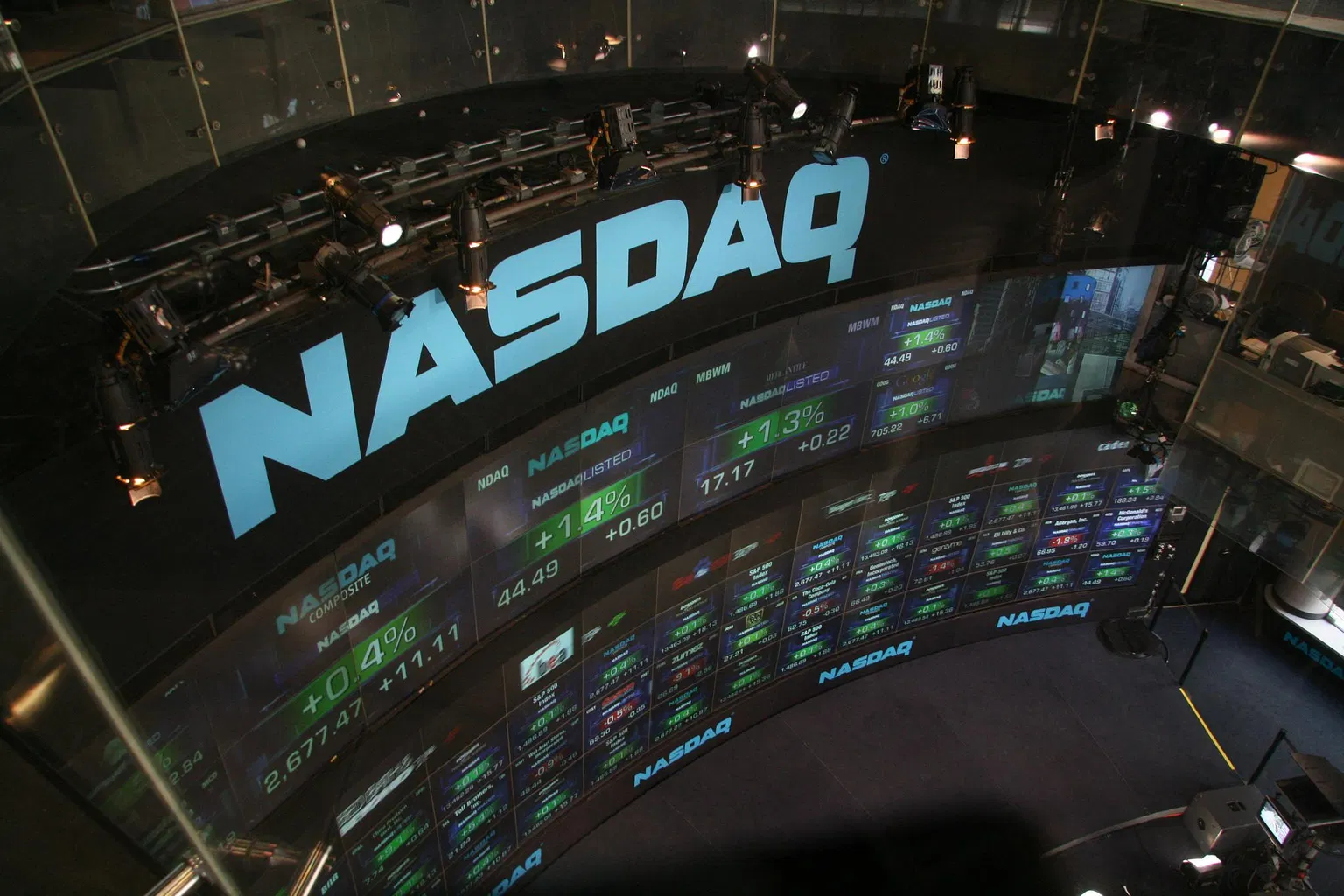
The Nasdaq Composite tumbled 2.6% on Thursday, October 22, 2026, closing at 26,008.86 in its sharpest one-day slide since June. The selloff — sparked by a fresh wave of anxiety over runaway AI spending — dragged the S&P 500 down 1.2% to 7,663.43, its worst session since July, and offered investors a stark reminder of how quickly the market's enthusiasm for artificial intelligence can reverse.
The damage was concentrated almost entirely in technology. Chipmakers and megacap AI names led the decline after a string of high-profile earnings reports, including results from Tesla and Meta Platforms, renewed questions about whether companies are spending hundreds of billions of dollars on AI infrastructure with too little evidence the investment will pay off. A rebound in oil prices tied to tensions involving Iran piled on further pressure, steering traders toward defensive sectors and government bonds.
How the Nasdaq Selloff Unfolded
Reuters reported that the tech-heavy Nasdaq suffered a steeper loss, falling 2.6% in the wake of a spate of high-profile AI-related earnings results. The Wall Street Journal said the main semiconductor index tumbled 6.7% on the day, making chips the epicenter of the rout.
The concentration of the decline was remarkable. According to StockTitan's analysis, AI and chip stocks accounted for roughly 90% of the value lost across the Nasdaq-100, underscoring how much of this year's gains have hinged on a narrow group of names. Meta Platforms was singled out as one of the weakest spots, with Yahoo Finance noting the stock was weighed down by higher AI spending, legal risk, and broader weakness in AI stocks.
The rotation was textbook risk-off. Defensive corners of the market — utilities, consumer staples, and healthcare — held up far better than growth stocks, while bonds rallied and Treasury yields dropped sharply as investors sought safety. The Dow Jones Industrial Average also declined, though less severely than the Nasdaq.
Timeline: From a Record High to a 2.6% Plunge
The speed of the reversal has been startling. Just over two weeks earlier, on October 6, 2026, the Nasdaq Composite set an all-time intraday record of 27,722.75 and a record closing high of 27,599.89. At roughly the same time, Nvidia was closing in on a $6 trillion market capitalization, a milestone that captured the sheer scale of the AI boom.
Since that peak, the index has surrendered more than 6%, a rapid round trip that mirrors the boom-or-bust anxiety coursing through markets all year:
- October 6, 2026: Nasdaq Composite closes at a record 27,599.89 (intraday high 27,722.75) as Nvidia nears $6 trillion.
- Mid-October: The IMF places the bursting of an AI investment bubble at the top of its list of risks to global financial stability.
- October 20, 2026: The Guardian asks whether this is the beginning of the end of the AI stock market boom.
- October 22, 2026: Nasdaq drops 2.6% to 26,008.86; the semiconductor index slides 6.7%; the S&P 500 loses 1.2%. The AI trade takes its second hit of the week.
Why AI Doubts Are Hitting Tech Stocks So Hard
At the heart of the selling is a simple, unresolved question: is the spending worth it? Meta, Amazon, Alphabet, and Microsoft are collectively expected to pour roughly $650 billion into AI-related infrastructure this year, according to widely cited estimates. Investors are increasingly demanding proof that this capital will convert into profits, and the latest earnings from Tesla and Meta did little to reassure them.
These concerns have been building for months. In July, Alphabet posted its first-ever negative free cash flow figure as a public company, a red flag for investors already nervous about data-center buildouts. More recently, the Bank of America monthly survey of global fund managers found that 45% now rank an AI bubble as the single biggest risk to markets — a clear sign that even professional money managers are hedging against a bust.
The financing side adds another layer of worry. Much of the AI buildout has been funded with debt, and analysts have repeatedly flagged concerns about debt-backed AI spending by the hyperscalers. A hawkish Federal Reserve outlook has compounded the problem: higher-for-longer interest rates make borrowing to build data centers more expensive and make richly valued growth stocks less attractive than bonds. That dynamic was visible in June, when the Nasdaq-100 was briefly on track to shed more than $1 trillion in market value on similar AI cost fears.
Analysts keep reaching for dot-com comparisons, and the parallels are hard to dismiss — a transformative technology, soaring valuations, and a market priced for perfection. The key difference, bulls argue, is that today's AI giants generate enormous real cash flow. But with oil climbing on renewed Iran tensions and squeezing the cost side of the AI equation, that argument carried little weight on Thursday.
Where the Market Stands Now
After Thursday's close, the Nasdaq Composite sits at 26,008.86 — well below its 52-week high of 27,722.75 but still comfortably above its 52-week low of 20,690.25. The S&P 500, at 7,663.43, remains up about 13% for 2026, with the bulk of that advance still tied to AI-linked names.
Futures pointed to lingering volatility in the following session as traders debated whether the move was a healthy correction or the leading edge of a larger unwind. Bond markets signaled caution, with Treasury yields falling as capital rotated decisively into safety.
What's Next for the Nasdaq and the AI Trade
The next few weeks hinge on two questions: whether upcoming megacap earnings can justify the enormous AI budgets, and whether geopolitical risk and oil prices keep climbing. If AI monetization continues to underwhelm, strategists warn that the rotation out of growth could accelerate and pull the broader indexes lower.
Yet corrections of this size have been common during the 2026 rally. StockTitan has documented more than two dozen occasions this year when the market's AI narrative flipped from boom to bubble, only for buyers to step back in and push stocks to fresh highs. For long-term investors, the more useful signal is whether the underlying investments — in chips, energy, and software — are still progressing, rather than the noise of any single session. As the IMF's warning makes clear, the real risk is not one bad day but a sustained loss of faith that the AI revolution can generate returns big enough to justify its price tag.
The Bottom Line: Key Takeaways
- The Nasdaq Composite fell 2.6% on October 22, 2026, to 26,008.86 — its worst day since June — while the S&P 500 dropped 1.2% to 7,663.43.
- The semiconductor index slid 6.7%, and AI/chip stocks accounted for roughly 90% of the value lost in the Nasdaq-100.
- Earnings from Tesla and Meta reignited fears that AI spending is outpacing clear returns; hyperscalers are expected to invest about $650 billion this year.
- Some 45% of fund managers now rank an AI bubble as the top market risk, and the IMF has put a bubble burst atop its financial-stability concerns.
- The pullback comes just over two weeks after the Nasdaq's record intraday high of 27,722.75 set on October 6.