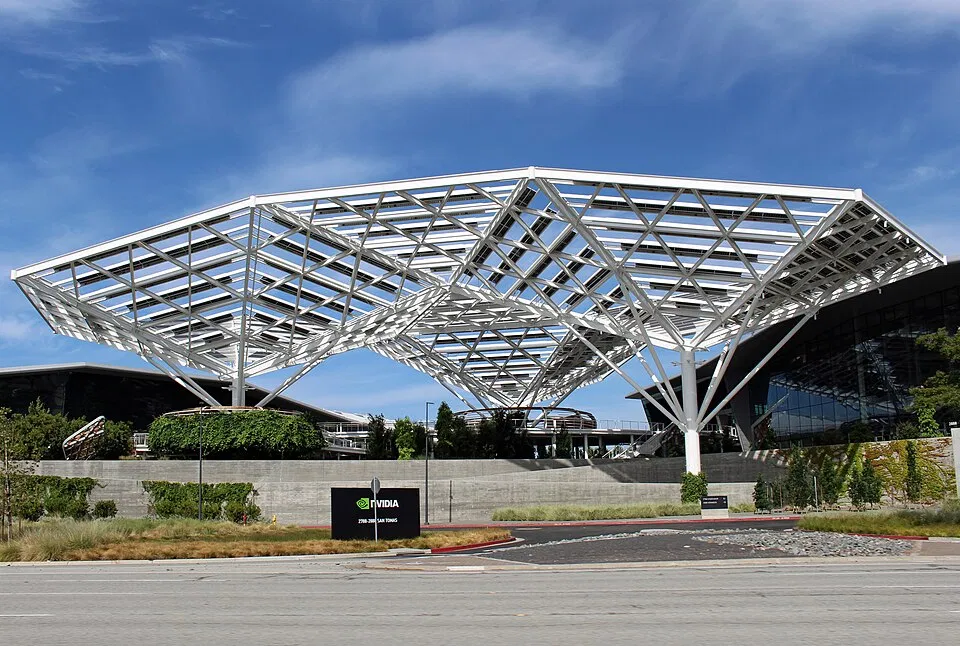
Nvidia stock (NASDAQ: NVDA) is surging again after the artificial intelligence powerhouse delivered a blowout quarter that sent shares up roughly 7%. Reporting after the closing bell on Wednesday, August 26, 2026, Nvidia posted fiscal second-quarter revenue of about $96.2 billion and adjusted earnings per share of $2.22, comfortably topping the $2.09 Wall Street consensus and confirming that demand for its data-center AI chips remains white-hot. The rally lifted Nvidia's market capitalization back above $5.4 trillion, reaffirming its place as one of the world's most valuable companies and reigniting the familiar question of just how much higher the stock can go.
A $96 Billion Quarter: Inside Nvidia's Blowout Results
Nvidia's latest results were nothing short of staggering. Revenue climbed 105.9% year over year to roughly $96.2 billion, while adjusted earnings of $2.22 per share beat consensus estimates by $0.13. It marked the 14th consecutive quarter that the chipmaker has surpassed Wall Street's forecasts, underscoring the durability of the AI infrastructure build-out that has made Nvidia the centerpiece of the technology trade.
Guidance reinforced the momentum. Management pointed to a forward outlook in the neighborhood of $108 billion, signaling that hyperscale cloud providers and enterprises are still racing to secure GPU capacity. The trailing-twelve-month picture tells the same story: revenue of about $303 billion, up 83% from a year earlier, and net income near $193 billion, up more than 120%.

Driving the growth is Nvidia's data-center segment, where its accelerators have become the de facto standard for training and running large AI models. The company's CUDA software ecosystem and its latest Blackwell-class chips have locked in an expanding base of customers, from cloud giants to financial institutions to sovereign AI programs, giving Nvidia both pricing power and remarkable revenue visibility.
The Road to a $5.4 Trillion Market Cap
Nvidia's ascent has been one of the defining stories of this market cycle. Founded in 1993 by Jensen Huang, Chris Malachowsky, and Curtis Priem in Sunnyvale, California, the company spent decades known primarily for gaming graphics. A 10-for-1 stock split in June 2024 made shares more accessible to retail investors just as the AI boom was accelerating.
The ChatGPT moment transformed Nvidia's trajectory, turning its GPUs into the picks and shovels of the generative-AI gold rush. Since then, the company has cemented a near-monopoly position in AI accelerators, and its financials have scaled accordingly — full fiscal-year 2026 revenue reached $215.9 billion with net income of $120.1 billion.
Fast forward to 2026: the stock began the year at $186.50 and has since climbed more than 20%. In early August, shares notched their biggest weekly surge in more than a year, and on August 26 the company delivered its latest earnings beat, sending the stock through the $225 mark toward fresh highs.
Why Analysts Are Raising Price Targets After the Print
The response from Wall Street was immediate and overwhelmingly bullish. Within hours of the report, a wave of price-target increases hit the tape. Wedbush lifted its target to $345 from $330, Truist moved to $346 from $307, and Needham raised its target to $300 from $270. Benchmark reiterated a $335 target, and DA Davidson held at $300.
Morningstar raised its fair-value estimate to $310 from $280, citing accelerating AI build-outs. The consensus rating on Nvidia stock remains a firm buy, with the average analyst price target sitting near $317 — implying roughly 40% upside from current levels. Some of the more bullish desks see the stock running as high as $425 or more over the next year.
Valuation is the perennial counterargument. Yet even after the surge, Nvidia trades at a forward P/E of roughly 34, below the technology-sector average, and carries a PEG ratio of just 0.42 — a level many investors read as a sign that growth is not yet fully priced in.
The Hugging Face Deal, China's Shadow, and a $500 Billion Opportunity
Beyond the numbers, several strategic headlines are shaping the Nvidia story. Reports indicate Nvidia has agreed to acquire the AI startup Hugging Face for about $12.9 billion, a move that would deepen its reach into the developer and open-source AI ecosystem. Separately, Nvidia has reportedly partnered with six financial institutions on a new initiative that analysts frame as a potential $500 billion opportunity in AI.
The biggest wild card remains China. Ongoing U.S. export restrictions on advanced chips continue to cloud Nvidia's access to what was once a major market, and executives have described the region as a persistent challenge. Shareholders, however, have a sizable cushion behind them: an $80 billion share-repurchase authorization approved in May 2026.
Where Nvidia Stock Stands Today
As of the morning of August 27, 2026, Nvidia shares were trading near $225, up about 7.5% on the session, within a 52-week range of $164.07 to $236.54. The company's market capitalization stands at roughly $5.45 trillion, and its short interest is a modest 1.23% of the float with a healthy 2.5 days-to-cover ratio — signs that bearish positioning is limited.
The company now employs about 42,000 people, pays a modest 0.47% dividend with a low 15% payout ratio, and has generated enough free cash flow to fund both its buyback and its aggressive spending on research and development.
What Comes Next for Nvidia Stock
Looking ahead, analysts expect Nvidia's earnings to grow about 43% in the coming year, and some forecasts call for revenue to climb as much as 70% through fiscal 2028 as AI inference demand compounds. The key watchpoints are hyperscale capital expenditure, the pace of Blackwell ramp, and any escalation of export controls.
For investors, Nvidia stock remains a high-conviction but volatile holding. The fundamentals are extraordinary, but the shares have historically sold off after several earnings beats as expectations run ahead of results. Those with a long-term horizon may view any such pullback as an opportunity, while more cautious investors will want to size the position carefully given the stock's rapid run.
The Bottom Line: What Investors Should Watch
- Nvidia beat again: Q2 revenue of ~$96.2 billion and EPS of $2.22 topped estimates, marking 14 straight quarterly beats.
- The stock jumped about 7.5% to near $225, pushing its market cap above $5.4 trillion.
- Analysts are raising targets (Wedbush $345, Truist $346, Needham $300) with a consensus near $317 and ~40% upside.
- Watch the reported Hugging Face acquisition, the $500 billion AI partnership, and China export risks.
- At a P/E of ~34 and a PEG of 0.42, bulls argue Nvidia's growth is still not fully reflected in the price.