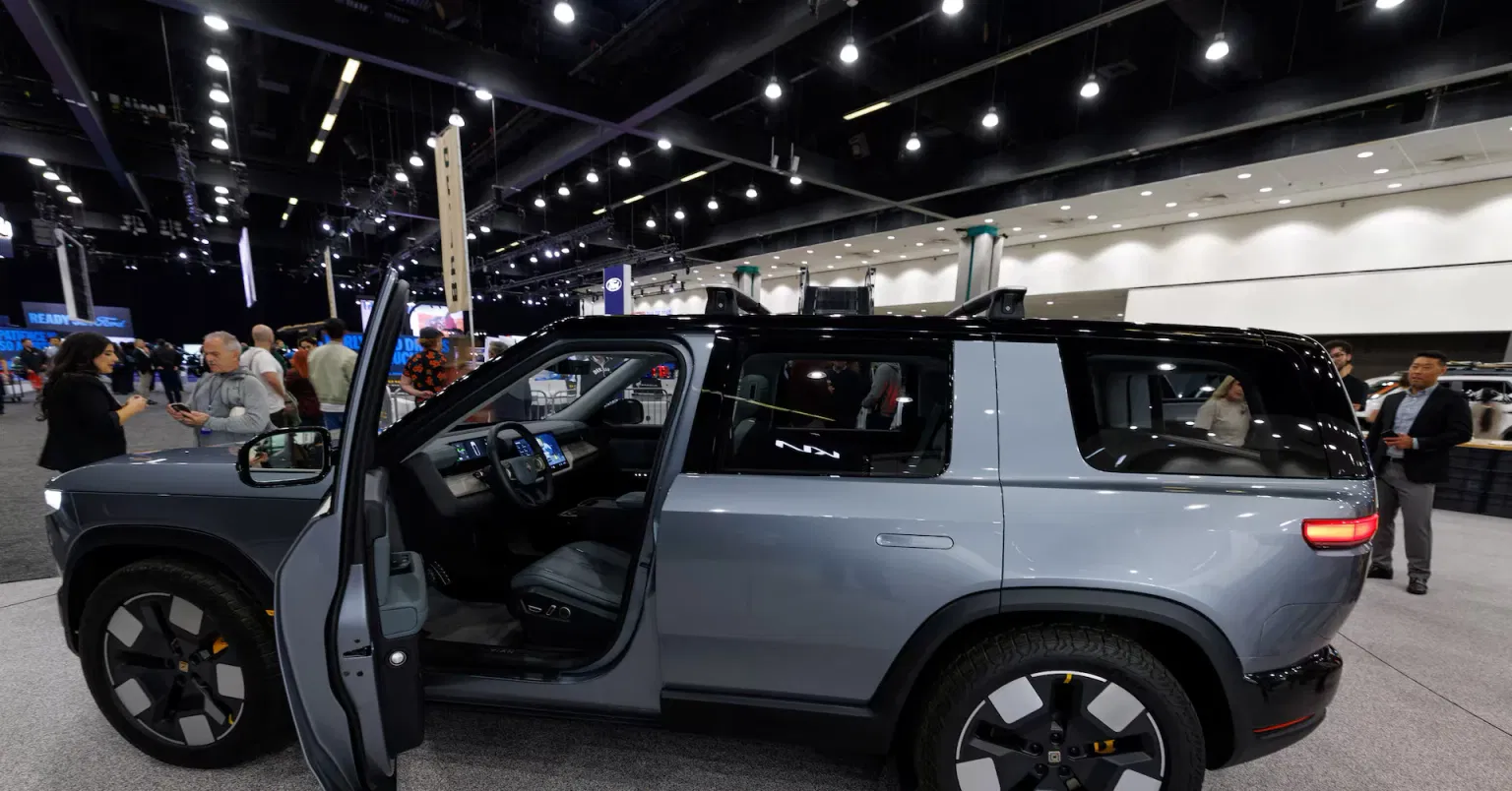
The electric vehicle revolution has produced some of the most dramatic stock stories of our time, and Rivian Automotive (NASDAQ: RIVN) sits at the center of this volatile narrative. After years of heavy losses and production challenges, the Irvine-based automaker finally delivered a breakthrough: its first quarterly gross profit of $170 million in Q4 2024. Yet even as the company announced this milestone alongside a massive $10 billion capital infusion, its stock tells a more complicated story—one of extreme volatility, divided analyst opinions, and an uncertain path forward for investors.
How Rivian's Financial Turnaround Unfolded
The numbers from Rivian's fourth quarter tell a story of meaningful progress. According to the company's SEC filing, Rivian not only achieved that $170 million gross profit but also delivered 14,183 vehicles while producing 12,727 at its Normal, Illinois facility. For the full year 2024, the company produced 49,476 vehicles and delivered 51,579—hitting the midpoint of its guidance range. Perhaps most importantly, Rivian reduced its automotive cost of goods sold by $31,000 per vehicle delivered compared to Q4 2023, demonstrating the kind of manufacturing efficiency that investors have been waiting years to see.
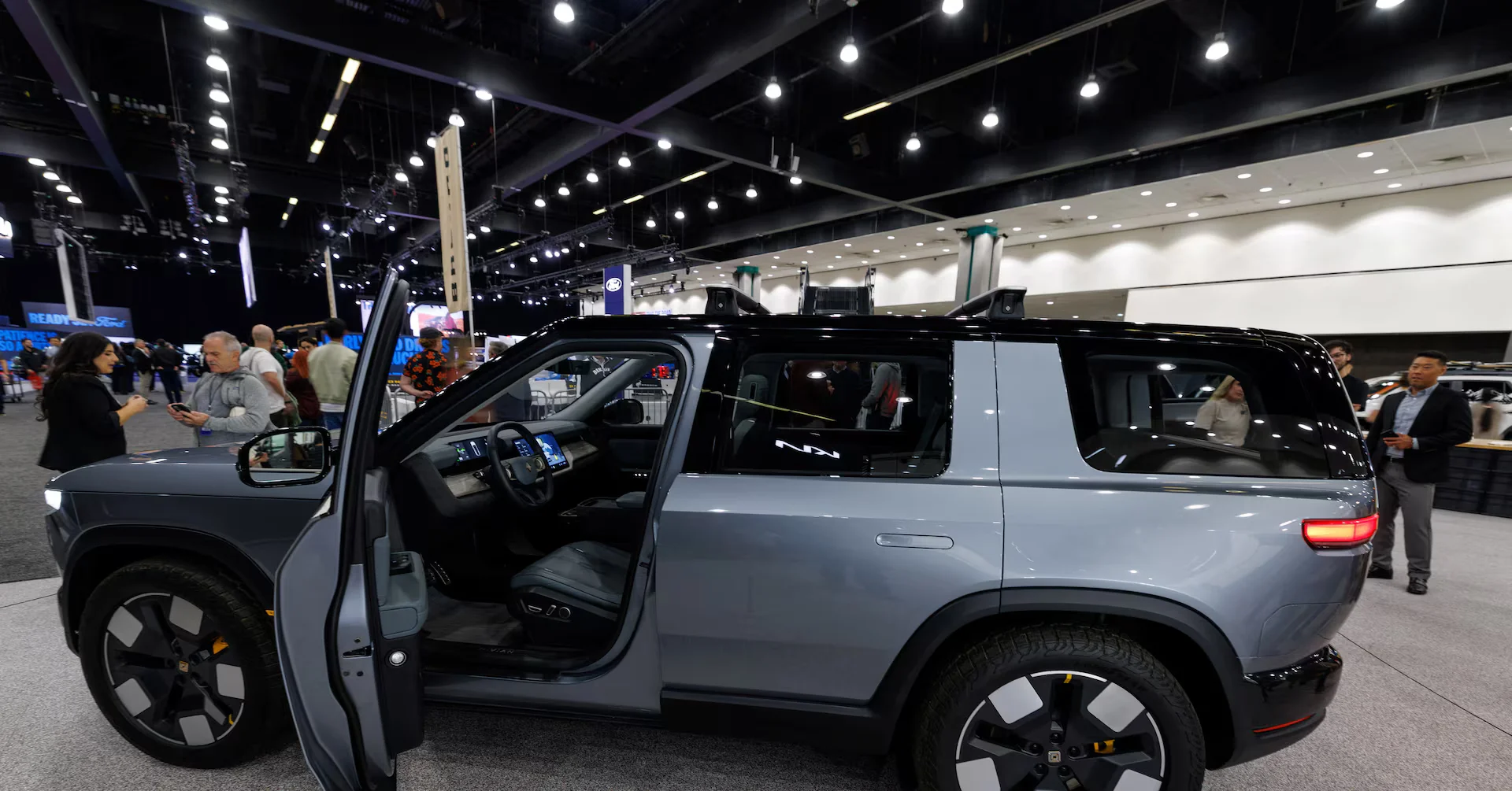
"This quarter we achieved positive gross profit and removed $31,000 in automotive cost of goods sold per vehicle delivered in Q4 2024 relative to Q4 2023," said CEO RJ Scaringe in the earnings release. "Our focus on cost efficiency across the business is critical for the launch of our mass market product, R2."
The financial foundation grew even stronger with two massive capital infusions. First, Rivian closed its joint venture with Volkswagen Group, a deal worth up to $5.8 billion that brings next-generation electrical architecture and software technology to both companies' future EVs. Second, the company secured a loan agreement with the Department of Energy's Loan Programs Office for up to $6.6 billion to support construction of its Georgia manufacturing facility. Combined with existing cash, this positions Rivian with the resources to fund operations through the R2 ramp-up and potentially achieve positive free cash flow.
Timeline: The Rollercoaster Journey of Rivian Stock
Understanding Rivian's current investment proposition requires looking at its turbulent history. The company went public in November 2021 at $78 per share amid enormous hype, briefly reaching a market capitalization over $150 billion—more than Ford or General Motors at the time. Then reality set in: production challenges, supply chain issues, and massive quarterly losses drove the stock down 43% in 2024 alone, leaving it approximately 86% below its IPO price.
December 2024 brought a glimmer of hope as shares surged 40% in the final month of the year, only to give back much of those gains in early 2025. The most recent volatility spike came after the Q4 earnings report, when shares jumped more than 25% in a single day—Rivian's best trading day ever—before settling back as analysts digested the mixed picture.
This pattern of extreme movements reflects what MarketWatch describes as "a stock caught between conflicting narratives": the promise of Rivian's innovative technology and design versus the brutal economics of scaling an automotive company in a competitive, capital-intensive industry.
Why Analysts Can't Agree on Rivian's Future
The analyst community currently presents one of the most divided pictures on Wall Street. According to Investing.com, Deutsche Bank recently upgraded Rivian from Hold to Buy with a $23 price target, citing improved outlook and reasonable volume expectations. Stifel maintained its Buy rating while lifting its target to $20 from $17. Meanwhile, UBS took a more cautious stance, with analyst Joseph Spak downgrading the stock to Underperform from Neutral and lowering his price target to $14 from $15—even as the stock was having its best day ever.
This split reflects fundamental disagreements about Rivian's path forward. Bullish analysts point to several factors: the company's strong brand positioning in the premium EV truck and SUV segments, its growing commercial van business (which delivered over 1 billion Amazon packages in 2024), and the potential of the upcoming R2 platform to dramatically reduce costs while expanding the addressable market.
Bearish analysts counter with equally compelling arguments. As Yahoo Finance notes, Rivian's stock is already down 15% year-to-date in 2025 despite the Q4 profit, and the company faces intense competition from both traditional automakers and Tesla. The EV market overall has seen demand soften, with pricing pressure squeezing margins across the industry. Furthermore, Rivian's guidance for 2025 calls for continued adjusted EBITDA losses of $1.7 to $1.9 billion, reminding investors that profitability remains a distant goal.
Where Things Stand Now: The Current Investment Landscape
As of late February 2025, Rivian shares trade around $16-17, putting the company's market capitalization at approximately $15 billion. This represents a dramatic fall from its peak but still values the company at a significant premium to traditional automakers on a price-to-sales basis. The average analyst price target sits around $18, suggesting modest upside from current levels, though targets range from as low as $10 to as high as $25.
The company's 2025 guidance offers both encouragement and caution. Rivian expects to deliver 46,000 to 51,000 vehicles this year—roughly flat compared to 2024—while working toward "modest gross profit" for the full year. Capital expenditures are projected at $1.6 to $1.7 billion as the company continues investing in its Georgia facility and R2 development.
Perhaps most telling is the company's own acknowledgment of external risks. In its SEC filing, Rivian notes that "external factors could impact Rivian's 2025 expectations, including changes to government policies and regulations and a challenging demand environment." This carefully worded caution reflects the reality that EV incentives, trade policies, and consumer sentiment remain volatile factors beyond the company's control.
What Happens Next: The Road Ahead for Rivian Investors
All eyes now turn to the R2 platform, which Scaringe describes as "a truly transformational product for Rivian." The company says the R2 bill of materials is approximately 95% sourced and expected to be about half that of the improved R1—a critical cost reduction that could make Rivian competitive in the $45,000-$55,000 SUV segment. The platform represents Rivian's bid to move beyond niche premium vehicles into the mainstream market where volume and scale matter most.
Looking further ahead, Rivian has signaled ambitious growth plans for 2026, with delivery guidance suggesting a potential 53% year-over-year increase driven by R2 ramp-up. This projection, noted by Reuters, would put the company on a path toward delivering 62,000-67,000 vehicles in 2026—a significant jump that depends entirely on successful execution of the R2 launch.
For investors, the decision comes down to risk tolerance and time horizon. Those with high conviction in Rivian's technology and management team might see current prices as an attractive entry point before the R2 launch. More cautious investors may prefer to wait for clearer signs of sustained profitability and market demand. As with many growth stories in transition, the biggest gains—and losses—often come during these pivot points between promise and proof.
The Bottom Line: Key Points to Remember
Rivian represents one of the most compelling yet challenging investment stories in the EV sector. The company has made genuine operational progress, achieving its first quarterly gross profit and securing vital long-term funding. Its stock, however, remains a volatile proposition caught between optimistic growth projections and the harsh realities of automotive manufacturing economics.
Key takeaways for investors:
- Rivian's Q4 2024 gross profit of $170 million marks a significant milestone, but the company still projects substantial losses for 2025
- The $10 billion capital infusion from Volkswagen and the DOE provides crucial runway for the R2 launch and Georgia factory construction
- Analyst opinions range widely, with price targets from $10 to $25 reflecting deep uncertainty about Rivian's future
- The R2 platform launch in 2026 represents the company's make-or-break moment for reaching mass market scale
- Current volatility suggests both opportunity and risk, making position sizing and timing critical considerations
As the EV market continues its unpredictable evolution, Rivian stands at a crossroads between niche player and mainstream contender. For investors willing to stomach the volatility, the coming year will provide crucial evidence about which path the company—and its stock—will ultimately follow.