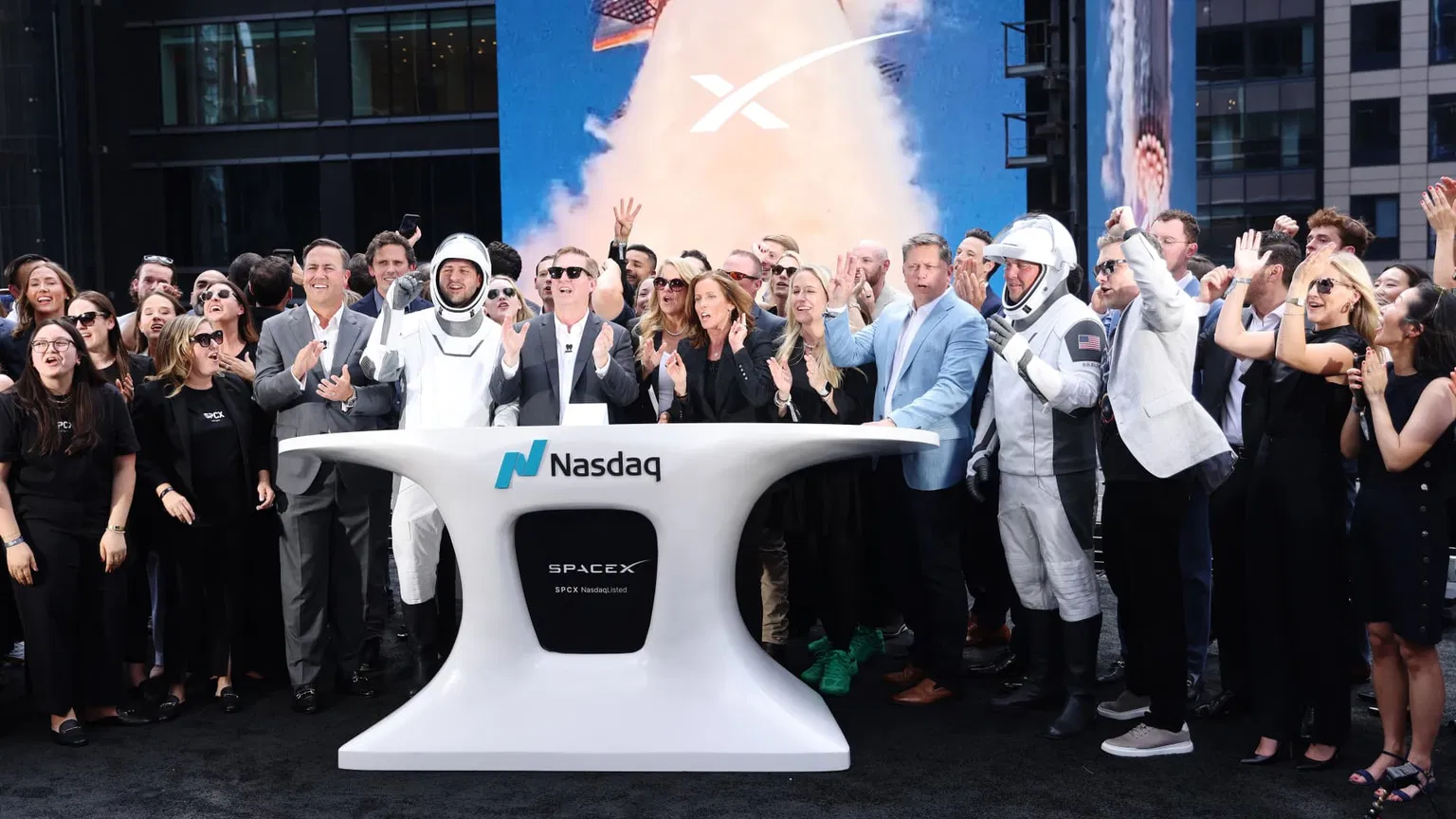
SpaceX made history on June 12, 2026, when its long-awaited initial public offering hit the Nasdaq under the ticker SPCX — and it did not disappoint. Opening at $150 per share and closing at $161.11, the stock surged more than 19% above its $135 IPO price, cementing the largest public market debut in history with a closing valuation of approximately $2.1 trillion. The blockbuster listing made founder Elon Musk the world's first trillionaire and signaled a new chapter for the aerospace and satellite internet giant.
How the Largest IPO in History Unfolded
SpaceX priced its IPO at $135 per share on June 11, 2026, raising $75 billion by selling roughly 555.6 million shares — instantly shattering all previous IPO records. The offering was met with staggering investor demand: sources told Reuters that the book was oversubscribed nearly four times, with a total of $250 billion in orders pouring in from institutional and retail investors alike. The IPO was led by a syndicate of Wall Street's top banks including Goldman Sachs, Morgan Stanley — whose veteran dealmaker Michael Grimes rejoined as chairman of investment banking specifically to position for this listing — and JPMorgan. The stock opened at $150 on June 12, hit an intraday high of $176.52, and closed at $161.11, giving the company a closing market capitalization of roughly $2.1 trillion. By comparison, the previous record-holder — Alibaba's $25 billion IPO in 2014 — is now less than a third of SpaceX's $75 billion raise.
Timeline: How SpaceX Got to the Nasdaq
The road to the SPCX IPO was years in the making. Founded by Elon Musk in 2002 with the goal of reducing space transportation costs, SpaceX spent two decades as a private company, periodically raising funds from investors including Founders Fund, Fidelity Investments, and Google Ventures. In December 2024, the company was valued at $350 billion in a secondary share sale. By July 2025, that figure had climbed to $400 billion. In December 2025, SpaceX reached an approximately $800 billion valuation through an insider share sale at $421 per share, with CFO Bret Johnsen telling employees in a staff memo that a 2026 offering was being prepared. On April 1, 2026, SpaceX confidentially filed for an IPO. In May 2026, the company executed a 5-for-1 stock split, adjusting the per-share fair market value from $526.59 to approximately $105.32 ahead of the public offering. Also in February 2026, SpaceX acquired Elon Musk's AI company xAI in an all-stock deal that valued the combined entity at roughly $1.25 trillion at the time. The S-1 filing revealed super-voting Class B shares carrying 10 votes per share, ensuring Musk and insiders retain voting control going forward. The IPO priced on June 11, 2026, and began trading the following day.
What the Financials Reveal: Starlink Is the Engine
SpaceX's S-1 filing offered the first detailed look at the company's financials. Revenue soared to $18.7 billion in 2025, up 33–43% year-over-year from $13.1 billion in 2024. The star of the show was Starlink, the satellite internet division, which accounted for $11.39 billion in revenue — approximately 61% of total revenue — and generated $4.4 billion in operating profit. Starlink's subscriber base grew from 4.6 million users at the end of 2024 to more than 9 million by the end of 2025, surpassing 10 million active customers across 160 countries by February 2026. The company's launch business generated $4.1 billion in revenue, up just 8% year-over-year, constrained by the fact that nearly three-quarters of SpaceX's 165 Falcon 9 launches in 2025 were used internally for Starlink deployment rather than for external customers. Despite the revenue growth, SpaceX reported a GAAP net loss of $4.9 billion in 2025 and an accumulated deficit of $41.3 billion as of March 2026 — driven by $20.7 billion in capital expenditures, stock-based compensation, and AI-related losses from the xAI acquisition. Adjusted EBITDA was approximately $6.6 billion.

Where SPCX Trades Now and What Investors Are Watching
As of the close of its first trading day, SPCX was trading at $161.11, giving the company a market capitalization of approximately $2.1 trillion. The stock was the most bought by individual investors on its debut day, according to VandaTrack data, with net buying running at more than 3.5 times the next most popular stock. Analysts are closely watching several key drivers: Starlink's continued subscriber growth and the recent $10/month price increase announced in May 2026, which signals a shift from aggressive expansion to monetization of the installed base; government and Pentagon contracts for launch services; and the integration of xAI's artificial intelligence capabilities. The super-voting share structure means that Elon Musk retains effective control of the company, a factor that some institutional investors may weigh carefully. For retail investors, the stock is available through most major brokerage platforms including Fidelity, Schwab, and Robinhood — simply search for ticker SPCX.
What Happens Next: The Road Ahead for SPCX
Looking forward, SpaceX is expected to continue its rapid growth trajectory, with Starlink projected to exceed 16 million subscribers by the end of 2026, potentially generating more than $20 billion in segment revenue. The launch business stands to benefit from increased Starship development progress and additional government contracts. However, investors should remain mindful of the risks outlined in the S-1: the company's GAAP losses and accumulated deficit, the capital-intensive nature of the business, regulatory uncertainties around satellite constellations, and the concentrated voting control held by Elon Musk. Post-IPO, lock-up periods for insiders will be an important event to watch, as early investors and employees may look to sell shares starting in late 2026.
The Bottom Line: Key Points to Remember
- Record IPO: SpaceX raised $75 billion at $135/share, the largest IPO ever
- Strong Debut: SPCX opened at $150 and closed at $161.11, up 19% on day one
- Valuation: Closing market cap of ~$2.1 trillion — larger than all but a handful of companies globally
- Starlink Dominates: Satellite internet generated 61% of 2025 revenue and is the primary growth engine
- Revenue Growth: $18.7B in 2025 revenue, up 43% year-over-year
- Risk Factors: GAAP net losses of $4.9B, $41.3B accumulated deficit, concentrated insider control