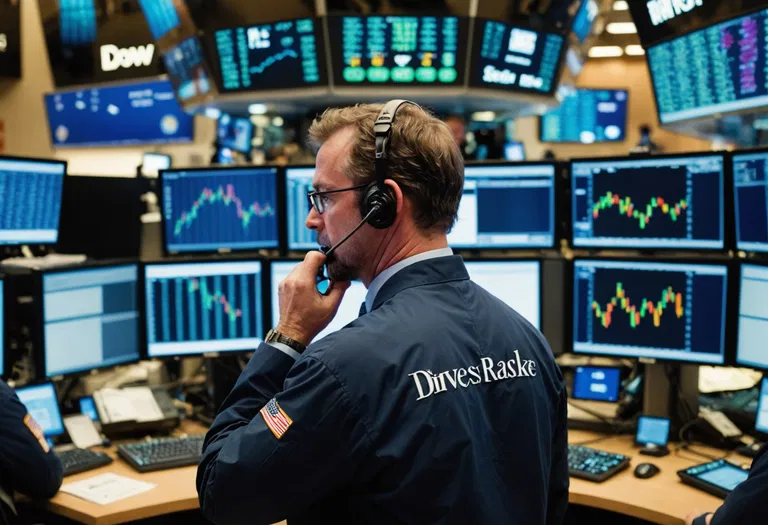
The stock market open today finds Wall Street in a far calmer mood than the turbulence that defined the past week. U.S. stocks advanced in a holiday-shortened Black Friday session, with the Dow Jones Industrial Average, S&P 500 and Nasdaq all higher as gains broadened beyond the mega-cap technology names that have dominated the tape all year. The steadier tone caps one of the most volatile stretches in recent memory — a week in which a single corporate-governance decision at Nvidia wiped out and then restored more than a trillion dollars of shareholder value in a matter of days.
For everyday investors, the episode is a vivid reminder of how quickly market narratives can reverse — and why chasing headline-driven swings is so dangerous. Here is what happened, what it means for your portfolio, and where the market is likely headed next.
The Huang Reversal That Sent Stocks Soaring
The catalyst for the chaos began on November 11, when Jensen Huang stepped down as Nvidia's chief executive under pressure from the company's board. The board had opened an internal investigation into his conduct and accepted his resignation, with Fortune reporting that he was pushed out over a lack of candor. The ouster of the executive who built the AI boom shook the semiconductor sector and triggered a punishing selloff in technology stocks that dragged the broader market into a correction.
Then came a stunning U-turn. President Donald Trump personally pushed for Huang's return, reportedly calling board members, according to NBC News and The New York Times. Just six days after the board chair had said Huang would not be rehired, the board reversed course. On Monday, November 23, Nvidia voted unanimously to reinstate Huang as president, chief executive and board director, effective immediately.
The market's response was explosive. Nvidia shares surged 31% in a single session — its biggest one-day gain since 2003 — and the rally rippled across the entire index. The S&P 500 jumped 4.73% to close at 7,237.17, while the Nasdaq Composite advanced 6.51% to 24,089.56, a gain of roughly 1,470 points and its second-largest one-day point advance on record. The Dow finished 1,450 points higher. It was the best day for U.S. stocks since April 2025, and the S&P 500 recovered just over half of the brutal losses it absorbed the prior week.
A Wild Week in Numbers: Record Rally, Then a Tariff Jolt
The euphoria did not last. By Tuesday, November 24, the rally began to unwind as the initial exuberance faded, with Nvidia sliding more than 7%. On Wednesday, the selling accelerated: Nvidia fell roughly 8% at the open as investors and governance critics questioned whether the leadership whiplash had permanently damaged confidence in the board's independence. Some observers noted the reinstatement came before the company's own investigations had concluded.
Compounding the pressure, the Trump administration on Wednesday fired a new tariff salvo at 14 major trading partners — including China, Vietnam, India and the European Union — citing what officials called excess industrial capacity. The proposed duties sent chip stocks tumbling, with Nvidia falling as much as 8.7% and the Philadelphia Semiconductor Index sliding sharply. The S&P 500 and Nasdaq ended lower but well off their lows as bargain hunters stepped in.
The key figures investors should remember:
- Nvidia (NVDA): up 31% Monday, then roughly down 7% Tuesday and down 8% Wednesday
- S&P 500: up 4.73% Monday to 7,237.17 — its best day since April 2025
- Nasdaq Composite: up 6.51% Monday to 24,089.56, a roughly 1,470-point gain
- Dow Jones: up 1,450 points on Monday
- New tariffs: proposed on 14 trading partners over excess factory capacity
What This Week Teaches Investors About Risk
Beyond the daily swings, the week carried three durable lessons for long-term investors. First, concentration risk is real and expensive. The market's fortunes have become tightly linked to a handful of mega-cap technology companies — Nvidia chief among them — and to the artificial-intelligence narrative. When that story wobbles, the entire index feels the shock, as the trillion-dollar swings in Nvidia's market value demonstrated. The fact that Black Friday's gains broadened beyond tech is, for many strategists, a welcome sign that the market's foundation may be becoming less fragile.
Second, policy risk has returned to the forefront. The new tariff proposals mark a fresh escalation in trade policy, and Reuters has noted that markets must now contend with a possible return of U.S. tariff increases. Tariffs raise input costs, squeeze corporate margins and can reignite inflation — all headwinds for equity valuations.
Third, the Federal Reserve is suddenly back in focus. The Nvidia-driven rally revived bets that policymakers could actually raise interest rates at the December Federal Open Market Committee meeting, with traders pricing in a nearly 100% probability of a hike, according to TheStreet. Some strategists warn that the rate-hike fears echo the conditions of 2018. Higher rates pressure stock valuations, particularly for richly valued growth and technology companies.
Where the Market Stands on Black Friday
After Thursday's Thanksgiving closure, U.S. markets reopened Friday for an abbreviated session with an early 1:00 p.m. ET close. The tone was markedly more positive: U.S. stock futures rose sharply overnight, while Asian and European equities rallied, with the holiday lull offering some respite from the prior week's turbulence. The Dow, S&P 500 and Nasdaq all advanced, and semiconductor names such as SanDisk and Marvell helped lead the rebound.
Notably, Nvidia itself turned lower during Friday's session, taking some shine off the tech rally even as the broader tape climbed. That divergence is the defining feature of the day: strength spreading across sectors, rather than depending on a single stock. When rallies lean on just a few names, they are vulnerable to sharp reversals. A wider advance suggests investors are regaining confidence in the economy as a whole.
What's Next: The Fed and the Tariff Timeline
Two events will shape the market's next move. The first is the Federal Reserve's December meeting, where Chair Kevin Warsh and his colleagues must weigh resilient markets and sticky price pressures against the risk of policy whiplash. The rapid swing in rate expectations — from cuts to a possible hike within days — underscores how unsettled the inflation and growth picture remains.
The second is the tariff timeline. The newly proposed duties on 14 partners are not yet final, and the coming weeks will reveal whether they are a negotiating tactic or a durable shift. Either outcome carries consequences for corporate earnings, supply chains and consumer prices.
For long-term investors, the lesson of this week is not to chase the swing but to stay disciplined. Volatility of this magnitude rewards diversification, a clear asset allocation and a focus on quality businesses that can withstand both AI euphoria and trade-policy uncertainty.
The Bottom Line: Key Takeaways
- The stock market is open today for a shortened Black Friday session, and major indexes are rallying as gains broaden beyond tech.
- Nvidia's reinstatement of Jensen Huang sent the stock up 31% Monday — its best day since 2003 — and drove the S&P 500 to its strongest session since April 2025.
- The rally faded within days as new Trump tariffs on 14 trading partners and fresh AI-related selling rattled markets.
- Investors now face two pivotal catalysts: a possible December Fed rate hike and the rollout of new trade duties.
- Concentration risk, policy risk and Fed policy are the three forces most likely to shape returns into year-end.