
In a major strategic shift that could redefine Amazon's position in the artificial intelligence race, the tech giant has announced a sweeping reorganization of its AI leadership structure. The move sees longtime AI chief Rohit Prasad departing after two years heading the company's artificial general intelligence (AGI) efforts, with AWS infrastructure veteran Peter DeSantis taking the helm of a newly unified organization that will oversee Amazon's most ambitious AI models, custom silicon development, and quantum computing initiatives. This leadership shakeup comes as Amazon faces mounting pressure to catch up with AI leaders like OpenAI, Google, and Microsoft, while simultaneously navigating significant workforce changes that include plans to cut up to 30,000 corporate jobs.
Amazon's AI Reorganization: What the Leadership Shuffle Means for Investors
The December 17 announcement from CEO Andy Jassy represents one of the most significant leadership changes in Amazon's AI division since the company began its aggressive push into generative artificial intelligence. According to internal memos published on Amazon's official news site, DeSantis—a 27-year company veteran who played crucial roles in developing Amazon EC2 and spearheading the acquisition of chip designer Annapurna Labs—will now lead an organization that combines three critical technology areas: AI models (including the Nova family), silicon development (Graviton, Trainium, and Nitro processors), and quantum computing.
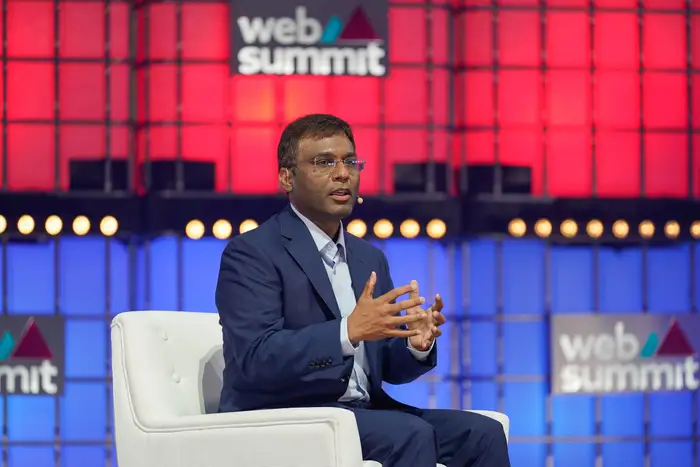
"I believe we are at this inflection point with several of our new technologies that will power a significant amount of our future customer experiences," Jassy wrote in the memo to employees. "I cannot think of a better leader for this organization than Peter." The timing is particularly notable, coming just two weeks after Amazon's annual re:Invent cloud computing conference where the company showcased its latest AI tools and services.
For investors, this consolidation of AI efforts under a single leader with deep infrastructure expertise signals Amazon's intent to accelerate its AI strategy by breaking down internal silos. DeSantis's background in managing AWS's global data centers and custom chip development suggests Amazon will leverage its cloud infrastructure advantages to compete more effectively in the AI hardware space currently dominated by Nvidia. As Reuters reported, Amazon has been working to shake a reputation that it's trailing competitors in developing AI models, having invested roughly $8 billion in startup Anthropic and considering as much as a $10 billion investment in OpenAI.
From Alexa to AGI: The Timeline of Amazon's AI Evolution
Rohit Prasad's departure marks the end of an era that began with the development of Amazon's Alexa voice assistant and evolved into leadership of the company's AGI initiatives. Prasad joined Amazon in 2013 during Alexa's early days and was elevated to report directly to Jassy in 2023 to lead the AGI team tasked with developing Amazon's "most ambitious" AI models. Under his leadership, Amazon launched the Nova family of AI models and built twelve foundation models with what the company claims is industry-leading price-performance.
The leadership transition occurs against a backdrop of broader organizational changes at Amazon. In October, Reuters exclusively reported that Amazon was planning to cut as many as 30,000 corporate jobs beginning in late October 2025—a move that would represent nearly 10% of its roughly 350,000 corporate employees. These cuts would affect various divisions including human resources, operations, devices and services, and Amazon Web Services. According to the report, managers of impacted teams underwent training on how to communicate with staff following email notifications that started going out in late October.

Jassy has been transparent about the connection between AI adoption and workforce changes, stating in June that increased use of artificial intelligence tools would likely lead to further job cuts, particularly through automating repetitive and routine tasks. "This latest move signals that Amazon is likely realizing enough AI-driven productivity gains within corporate teams to support a substantial reduction in force," said Sky Canaves, an eMarketer analyst, in the Reuters report. "Amazon has also been under pressure in the short-term to offset the long-term investments in building out its AI infrastructure."
Why Amazon's AI Bet Could Be a Game-Changer for the Stock
From an investment perspective, Amazon's AI reorganization presents both opportunities and challenges. The unification of AI models, silicon development, and quantum computing under DeSantis's leadership could create significant synergies that accelerate innovation and reduce dependencies on external chip suppliers. This vertical integration approach mirrors strategies employed by other tech giants like Apple and Tesla, who have seen benefits from controlling both hardware and software development.
However, Amazon faces formidable competition in the AI space. While the company's Nova models have earned praise for their efficiency, they still trail frontier models such as OpenAI's GPT offerings, Anthropic's Claude Opus, and Google's Gemini. Amazon's cloud computing unit AWS reported second-quarter sales of $30.9 billion—a 17.5% increase that was well below gains of 39% for Microsoft's Azure and 32% for Alphabet's Google Cloud, according to Reuters data.
The market's initial reaction to Amazon's strategic shifts has been cautiously optimistic. Following the October job cut announcement, Amazon shares rose 1.2% to $226.97, suggesting investors viewed the cost-saving measures positively. This aligns with broader market trends where tech companies announcing AI-driven efficiency measures have often seen stock price appreciation, despite the human cost of layoffs.
Where Amazon Stands Now: AI Investments and Market Position
Amazon's current AI position reflects a company in transition—leveraging its massive cloud infrastructure while playing catch-up in model development. The company's investments tell a story of aggressive pursuit: $8 billion in Anthropic, potential $10 billion in OpenAI, plus massive infrastructure investments including $35 billion in India by 2030 to advance AI innovation, $15 billion in Northern Indiana for data center campuses, and up to $50 billion to expand AI and supercomputing infrastructure for US government agencies.
According to CNBC's December analysis, AI was responsible for almost 55,000 layoffs in the U.S. in 2025, with Amazon being one of the major firms citing AI as a factor in job reductions. The broader tech sector saw 1.17 million job cuts through 2025—the highest level since the Covid-19 pandemic in 2020. This context underscores the transformative impact AI is having on corporate structures across the industry, not just at Amazon.
Jassy's vision, as detailed in shareholder letters and internal communications, frames generative AI as "the most transformative technology we've seen since the Internet." He has warned employees of impending changes, predicting that AI will automate manual roles while creating new opportunities in AI-driven fields. This perspective is increasingly reflected in Amazon's hiring patterns, with the company aggressively recruiting AI talent while reducing positions in other areas.
The Road Ahead: Predictions for Amazon's AI-Driven Growth
Looking forward, several key developments will shape Amazon's AI trajectory and investment potential. First, the success of DeSantis's unified organization in delivering integrated AI solutions that leverage Amazon's custom silicon will be crucial. Early indications suggest the company is making progress—Amazon recently launched Nova 2 models at re:Invent, and its custom silicon business is growing rapidly.
Second, Amazon's quantum computing initiatives, now under the same leadership as AI models, could create unique long-term advantages. While quantum computing remains in early stages, its integration with AI efforts positions Amazon to potentially develop hybrid systems that solve problems intractable for classical computers, particularly in areas like drug discovery, financial modeling, and complex optimization.
Third, investor attention will focus on whether Amazon's AI investments translate into measurable financial results. While AWS remains the profit engine, its growth has slowed relative to competitors. Successful AI integration could reinvigorate AWS growth while creating new revenue streams across Amazon's e-commerce, advertising, and devices businesses.
Finally, the human capital dimension cannot be ignored. As Amazon implements AI-driven automation, its ability to reskill existing employees and attract top AI talent will significantly impact innovation velocity. The company's recent leadership changes and workforce reductions suggest a difficult but necessary transition toward a more AI-centric organizational structure.
Key Takeaways for Investors
Amazon's AI reorganization represents a critical inflection point for the company and its investors. The leadership change from Prasad to DeSantis signals a shift toward infrastructure-led AI development that leverages Amazon's cloud computing strengths. While near-term challenges include competitive pressures and workforce transitions, the strategic consolidation of AI, silicon, and quantum computing could create sustainable competitive advantages.
Investors should monitor several key metrics: AWS growth rates relative to competitors, adoption of Amazon's Nova AI models, progress in custom silicon development, and the financial impact of cost-saving measures. The company's ability to execute on its integrated AI vision while managing human capital transitions will likely determine whether this reorganization accelerates Amazon's position in the AI race or merely represents internal restructuring.
As with any major technological transition, there will be volatility and uncertainty. However, Amazon's scale, resources, and proven ability to reinvent itself suggest the company is positioning for the next phase of AI innovation. For long-term investors, the current reorganization may represent a strategic buying opportunity, while short-term traders should watch for execution milestones and competitive responses in the rapidly evolving AI landscape.