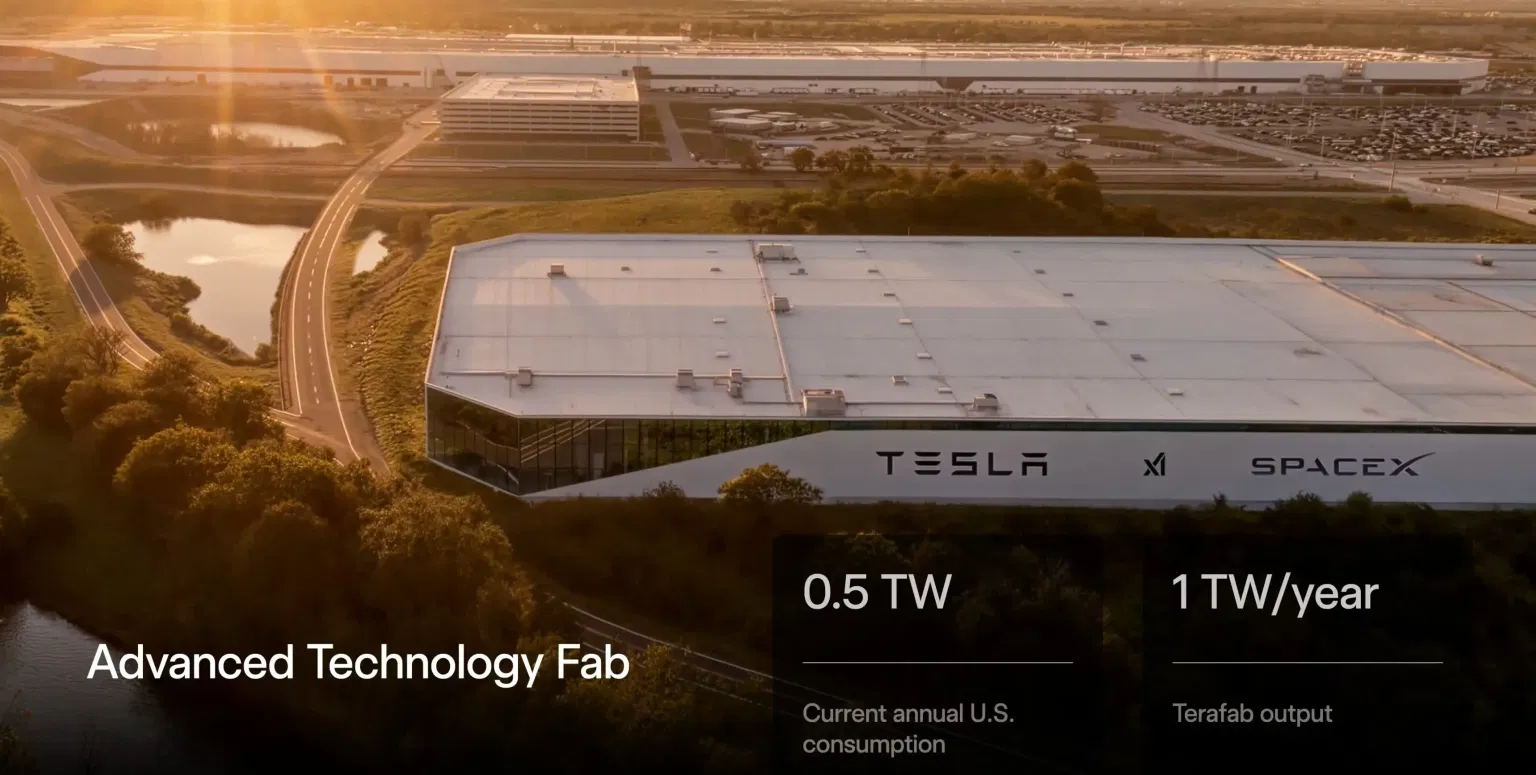
Elon Musk has placed his biggest bet yet—a $25-40 billion semiconductor manufacturing facility called Terafab that promises to revolutionize chip production for Tesla, SpaceX, and the future of artificial intelligence. Announced on March 21, 2026, the ambitious project aims to produce one terawatt of computing power annually, doubling the United States' current annual power generation. But as Tesla stock wobbled on the news, dropping over 1% in overnight trading, investors are asking whether this moonshot represents visionary leadership or desperate overreach.
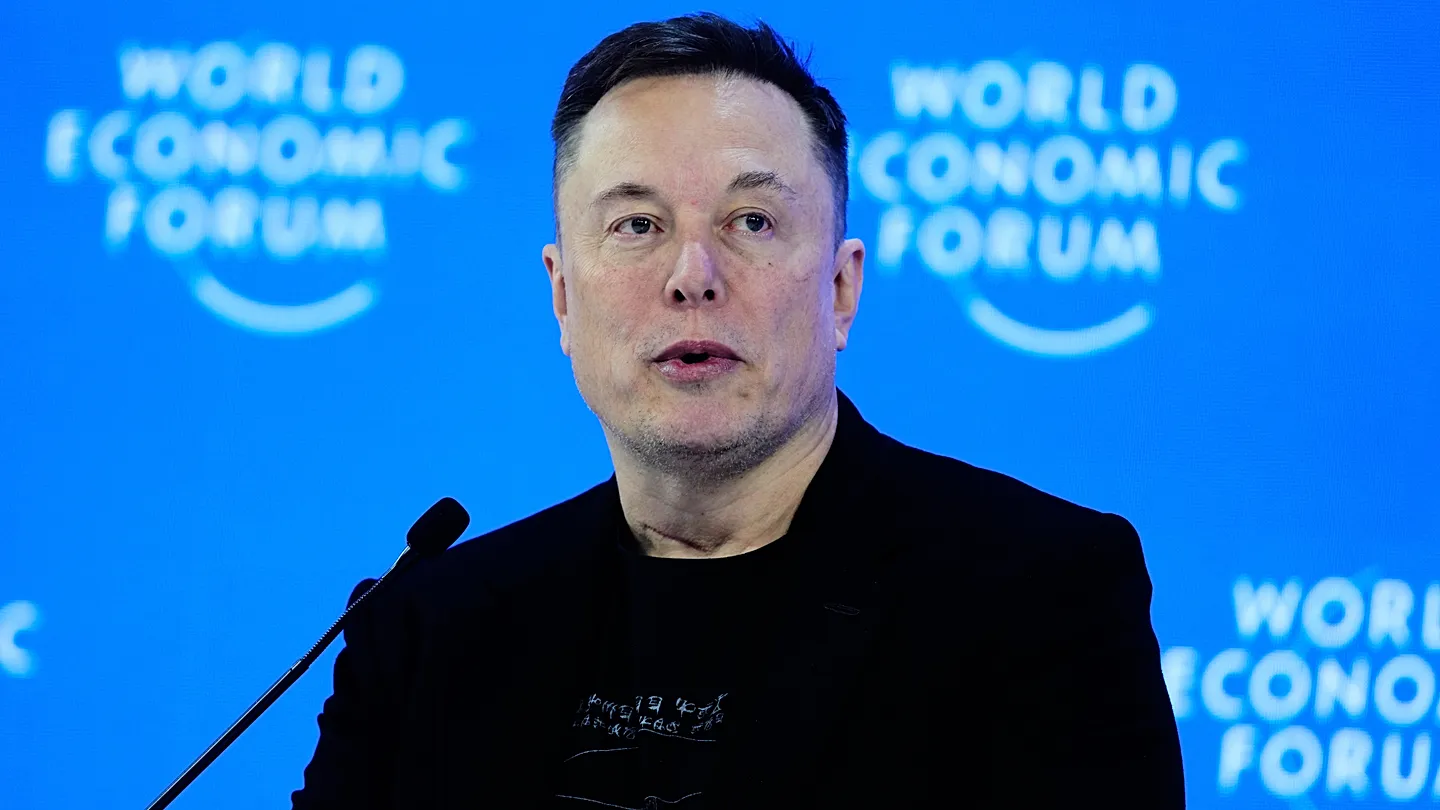
Elon Musk's $25 Billion Gamble: Inside the Terafab Announcement
Speaking from the former Seaholm Power Plant in Austin, Texas, Musk framed Terafab as "the most epic chip building exercise in history by far." The facility—a collaboration between Tesla, SpaceX, and xAI—will combine chip design, fabrication, mask production, packaging, and testing under one roof. Musk revealed that Terafab will technically consist of two coordinated fabrication lines, each dedicated to a single chip design: one for Tesla's vehicles and Optimus humanoid robots, and another for SpaceX and xAI's space-based AI systems.
"We either build the Terafab, or we don't have the chips, and we need the chips, so we build the Terafab," Musk told reporters, according to Reuters. The billionaire emphasized that the existing semiconductor industry's 20% annual growth in chip and memory output is insufficient for his companies' ambitions. Terafab targets a production capacity of 100-200 billion custom AI and memory chips per year, with roughly 80% of its compute output destined for space-based AI infrastructure.
From Concept to Reality: The Terafab Timeline
The road to Terafab began years earlier with Musk's growing frustration with chip supply constraints. In January 2026, Musk first publicly stated that Tesla needed to build a "TeraFab" to manufacture semiconductors. By March 14, he teased that the project would launch in seven days. The formal announcement came on March 21, with Musk calling Terafab "the final missing piece" of Tesla's AI chip strategy.
Critical details emerged in the days following: the facility would require thousands of acres near Austin, more than 10 gigawatts of power at full scale, and a footprint approaching 100 million square feet. Musk confirmed these estimates were "the right order of magnitude." Production is targeted for late 2027, though analysts immediately questioned the timeline given the unprecedented scale.
Why Terafab Could Be Tesla's Biggest Risk—or Reward
The financial implications of Terafab are staggering. With an estimated cost of $25-40 billion, the project represents 4-6 years of Tesla's entire annual free cash flow ($6.2 billion). This necessitates what would be Tesla's first major capital raise since December 2020, when the company raised $5 billion at peak stock prices. The potential dilution for existing shareholders is significant, with a capital raise of this magnitude potentially increasing share count substantially.

Patrick Moorhead, chief analyst at Moor Insights & Strategy, captured the analyst consensus: "Terafab, as described, is the most ambitious semiconductor manufacturing bet in history." He noted that producing chips at Tesla's target level requires access to a complete production-ready manufacturing stack currently available only from TSMC, Samsung, and Intel. "You can't build a 2-nanometer fab without a production-ready process flow from someone," one semiconductor analyst wrote. "This isn't a detail. It's the foundation."
Morgan Stanley estimates Terafab could require an additional $35-45 billion in capital expenditures beyond the initial $20 billion equipment spending Tesla has planned for 2026. Barclays warned the total cost could reach "many multiples" above $50 billion. These figures explain why Tesla shares dropped 17% in some trading sessions following the announcement, though the stock later recovered some losses.
Where Tesla Stock Stands After the Terafab News
Tesla's stock reaction has been volatile and contradictory. Immediately after Musk's detailed presentation, shares slipped over 1% in overnight trading, with TSLA hitting $367.96—its lowest level in more than six months and a 3% drop for the week. However, by Monday morning, the stock had jumped 3.5% as some investors embraced the long-term vision.
This split reaction reflects the fundamental debate among investors: Is Terafab a necessary vertical integration move that will secure Tesla's AI future, or a costly distraction that exposes the company's desperation for growth narratives? At roughly 190 times estimated 2026 earnings, Tesla's valuation already prices in extraordinary future success. Any misstep on Terafab could trigger significant multiple compression.
The Road Ahead for Tesla and Terafab
The next 12-18 months will be critical for Terafab's credibility. Musk must identify a manufacturing process partner, confirm equipment orders, and provide a realistic production timeline. He has not yet disclosed whether Tesla will partner with TSMC, Samsung, or Intel for the underlying technology—a decision that will determine the project's feasibility.
Equally important will be Tesla's capital raising strategy. The company has four options: equity offering (dilutive to shareholders), debt issuance (increasing interest expense), partnership funding (potentially ceding control), or using operating cash flow (which would strain other investments). Each approach carries different implications for shareholder value.
Dan Nystedt, vice president of research at TriOrient, noted that Terafab could represent a reversal of decades of semiconductor-industry specialization. By bringing logic, memory, and packaging together, Tesla aims to create a vertically integrated "systems-level" chip facility that could potentially outperform traditional foundries in specific applications.
Key Points for Investors
For investors navigating the Terafab announcement, several key takeaways emerge:
- Massive Capital Requirements: Terafab's $25-40 billion price tag represents one of the largest single industrial investments in history, requiring external financing that will likely dilute existing shareholders.
- Execution Risks: Semiconductor manufacturing is among the most complex industrial processes, with only three companies globally possessing the technology Tesla needs.
- Strategic Necessity: Musk argues that without Terafab, Tesla's AI ambitions for vehicles, robots, and space-based systems will be constrained by chip supply limitations.
- Stock Volatility Ahead: Expect continued price swings as more details emerge about financing, partnerships, and timelines.
- Long-term Vision vs. Short-term Reality: While Terafab aligns with Musk's history of ambitious bets (Gigafactories, SpaceX reusability), its scale and timing coincide with Tesla's slowing automotive growth and increasing competition.
As one analyst summarized: "Terafab is either the boldest move in semiconductor history or the most expensive mistake. For Tesla investors, there's no middle ground." The coming months will reveal which outcome awaits.