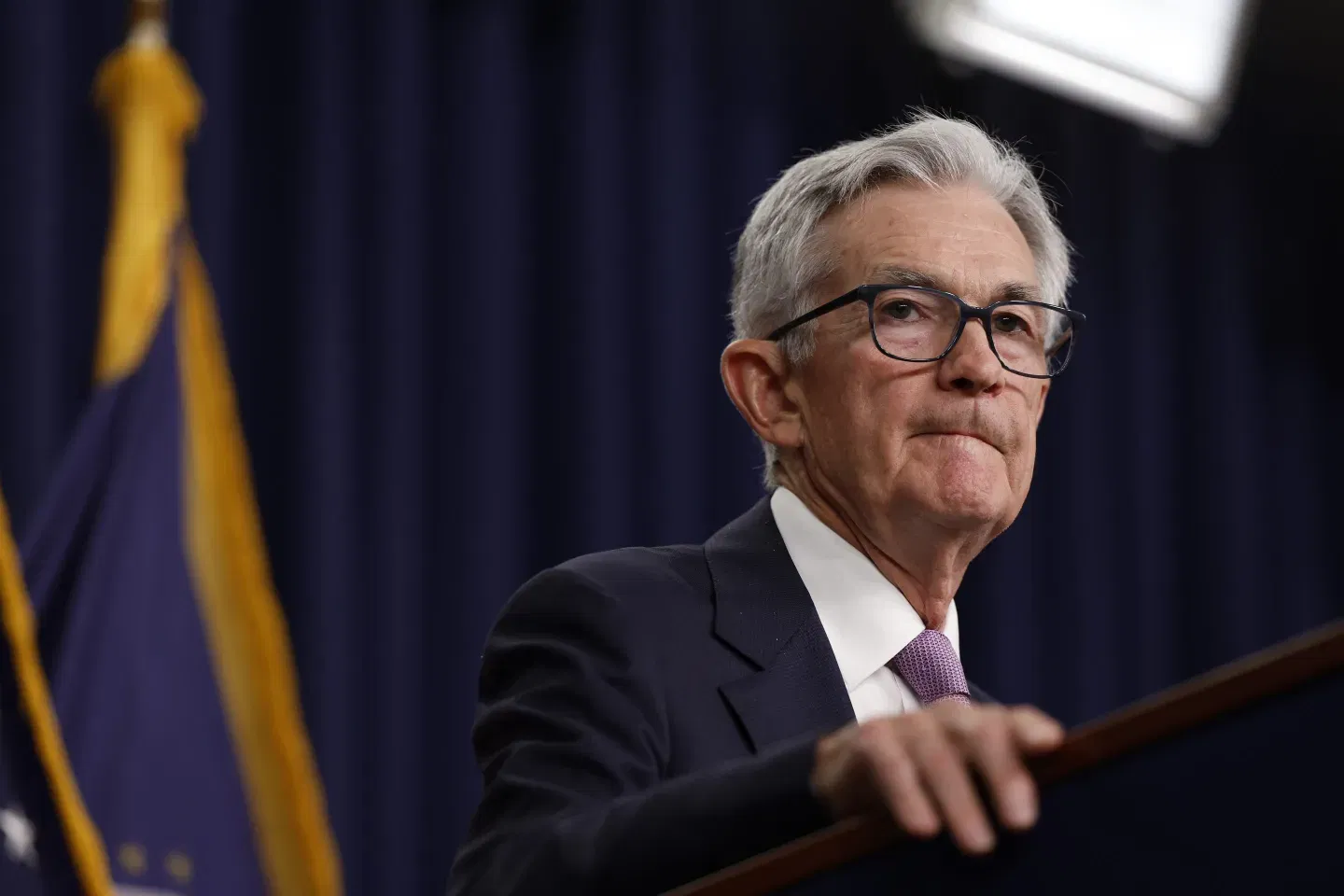
The Federal Reserve made a historic move on September 18, 2024, cutting interest rates by 50 basis points in its first easing action since the early days of the COVID-19 pandemic. The Federal Open Market Committee (FOMC) lowered the target range for the federal funds rate to 4.75%-5%, down from 5.25%-5.5%, marking a significant pivot in monetary policy after more than a year of anticipation. Fed Chair Jerome Powell signaled that this "jumbo" cut is likely just the beginning of an easing cycle designed to support economic growth amid cooling inflation and a softening labor market.
The Fed's Bold Move: A 50 Basis Point Rate Cut
In a move that caught some investors by surprise with its magnitude, the Federal Reserve opted for a larger-than-typical 50 basis point reduction rather than the expected 25 basis points. This aggressive cut represents the Fed's first interest rate decrease since March 2020, when the central bank slashed rates to near-zero levels in response to the pandemic.
According to the FOMC statement, the Committee decided to lower rates "in light of the progress on inflation and the balance of risks." Fed officials noted they have "gained greater confidence that inflation is moving sustainably towards two percent" while acknowledging that "the labor market has become less tight." The statement highlighted that recent indicators suggest economic activity has continued to expand at a solid pace, but with growing concerns about softening consumer spending and rising unemployment.
Chester Spatt, finance professor at Carnegie Mellon's Tepper School of Business, told Fortune that investors should expect short-term volatility, especially if the Fed embarks on a sequence of rate changes. "These periods where the direction of rates is changing tend to be periods of uncertainty," said Spatt, noting that the timing coincides with the home stretch of a presidential race when investors tend to overreact to political developments.
From Pandemic Hikes to September Easing: The Fed's Journey
The September 2024 rate cut marks a dramatic shift from the Fed's previous stance. From March 2022 to July 2023, the central bank raised interest rates 11 consecutive times in its most aggressive tightening cycle in decades, lifting the federal funds rate from near-zero to a 22-year high of 5.25%-5.5%. This campaign was aimed at taming inflation that had reached 40-year highs following pandemic-related supply chain disruptions and fiscal stimulus.
The pivot began to take shape in late 2023 as inflation showed sustained signs of cooling. By August 2024, Fed officials had signaled that a September rate cut looked likely, with the "vast majority" of policymakers anticipating easing. The actual decision to cut by 50 basis points rather than 25 reflects growing concern about the labor market, which has shown signs of softening with rising unemployment claims and slowing job growth.
JPMorgan analysts noted in their September 19 assessment that "the Fed's decision to ease monetary policy is likely to support growth and stabilize a slowing labor market." They believe this represents the beginning of the Fed moving into a new stance where "recent slowing in the labor market is now a bigger risk than inflation."
What the Rate Cut Means for Your Investment Portfolio
The Fed's rate-cutting cycle has profound implications for investors across asset classes. According to research from Wells Fargo Investment Institute (WFII), the S&P 500 tends to rise steadily in the 18 months following a rate cut when those cuts don't correspond with a recession. Even when there is a recession—which WFII considers unlikely—stock market performance is "essentially flat."
Tracie McMillion, head of global asset allocation strategy at WFII, notes that some sectors actually perform better when rate cuts correspond with a recession than they do when they don't. Financials, health care, consumer staples, and tech fall into this category. "Studying historical stock market data, WFII found that the S&P 500 rises steadily in the 18 months following a rate cut," McMillion told Fortune.
For bond investors, the outlook is more nuanced. JPMorgan strategists believe bond yields are likely to fall lower from here but remain elevated today. "Our strategists see this as an opportunity to lock in attractive rates and consider a move out of excess cash positions," the firm noted in its analysis. The 50 basis point cut reinforces that reinvestment risk is real, and bond yields could still move lower as the easing cycle progresses.
Historical context provides important perspective: According to research by Hartford Funds, seven out of 11 periods of sustained rate cutting since 1980 have coincided with recessions. However, this doesn't necessarily spell disaster for investors. Even during recessionary periods, certain asset classes have shown resilience, and the Fed's proactive stance may help engineer the elusive "soft landing" where inflation returns to target without triggering a severe economic downturn.
Market Reaction and Immediate Impact
Initial market reaction to the Fed's announcement was surprisingly muted, but gave way to a significant rally the following day. Reuters reported that "market calm yields to stocks surge as investors cheer Fed rate cut," with the S&P 500 up 1.3% on September 19, hitting a fresh intraday high. This represented a sharp contrast to the day before when stocks finished lower after the announcement.
The muted initial reaction likely reflected uncertainty about whether the larger cut signaled greater concern about economic weakness. However, as investors digested Powell's press conference comments and the FOMC statement, confidence grew that the Fed was taking proactive measures to sustain economic expansion rather than reacting to imminent crisis.
Small-cap stocks, which are particularly sensitive to interest rate changes and domestic economic conditions, showed particular strength in the aftermath. The Russell 2000 index of small-cap companies outperformed larger indexes, suggesting investors see the rate cut as especially beneficial for smaller businesses that face higher borrowing costs.
Forecasting the Fed's Next Moves
Looking ahead, market participants and analysts expect additional rate cuts in 2024 and beyond. JPMorgan strategists believe there will likely be two additional rate cuts in 2024, and expect the cuts to continue into 2025. Fed Chair Powell emphasized that future decisions would depend on incoming data, but the larger September cut suggests the central bank wants to get ahead of potential economic weakness.
The Fed's updated "dot plot," which shows individual policymakers' rate projections, will provide crucial insight into the expected pace of easing when released at the December meeting. Current market pricing suggests expectations for a total of 100-125 basis points of cuts by the end of 2024, meaning another 50-75 basis points beyond the September move.
For investors, this environment presents both opportunities and challenges. The transition from a tightening to an easing cycle typically creates volatility as markets adjust to new economic realities. However, history suggests that well-positioned portfolios can navigate this transition successfully, particularly if the Fed manages to achieve a soft landing.
Key Points for Investors
As the Fed embarks on its first easing cycle in four years, several key takeaways emerge for investors:
- Expect increased volatility: Periods of shifting monetary policy direction typically bring market uncertainty, especially when combined with election-year politics.
- Focus on quality sectors: Financials, healthcare, consumer staples, and technology have historically performed relatively well during rate-cutting cycles.
- Reconsider bond allocations: With yields likely to decline further, consider locking in attractive rates and reducing excess cash positions.
- Monitor economic indicators: The Fed's future moves will depend on inflation, employment, and consumer spending data in coming months.
- Maintain perspective: While 7 of the last 11 rate-cutting cycles coincided with recessions, markets have shown resilience even during economic downturns.
The September 2024 rate cut represents a significant inflection point for both the economy and financial markets. As Fed Chair Powell noted in his press conference, the central bank's actions are designed to "support economic growth" while maintaining progress on inflation. For investors, understanding the implications of this policy shift—and positioning portfolios accordingly—will be crucial in the months ahead.