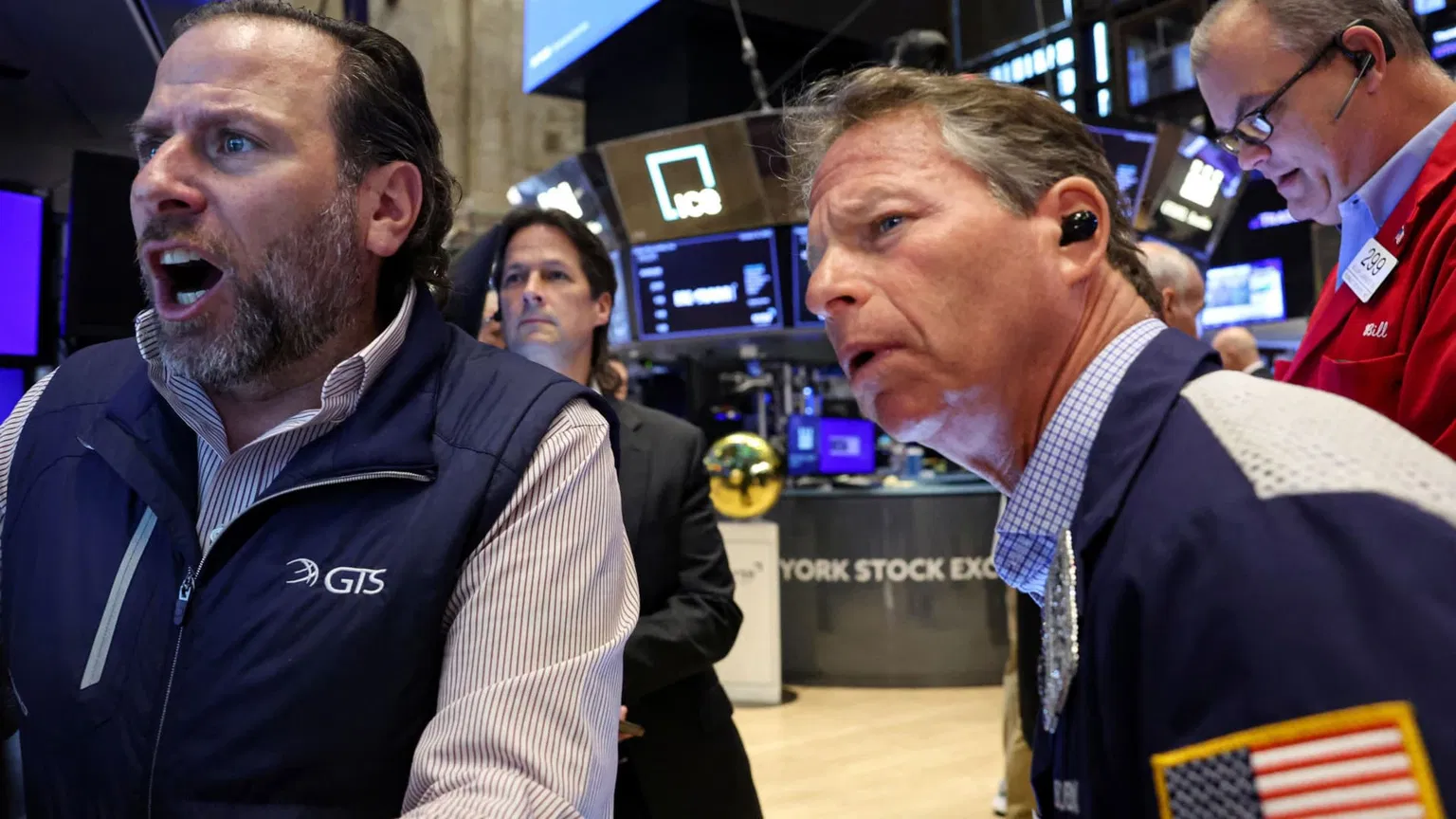
The final month of 2024 delivered one of the most dramatic stock market selloffs in recent history, with the Dow Jones Industrial Average plunging 1,100 points on December 17 alone—marking the index's first 10-day losing streak since 1974. As the Federal Reserve's mixed signals on interest rates collided with elevated Treasury yields and year-end portfolio adjustments, investors witnessed the Nasdaq Composite tumble 3.56% to 19,392.69 and the S&P 500 pull back 2.95% in a single session. Yet, despite this late-year volatility, 2024 ultimately capped a remarkable two-year bull run, with the Nasdaq surging 28.6% for the year and the S&P 500 notching a 23.3% gain.
How the Fed's Rate Decision Triggered a Market Earthquake
At the center of December's storm was the Federal Reserve's December 18 policy meeting, where policymakers delivered a quarter-point rate cut—a move widely anticipated by markets—but paired it with a surprisingly hawkish projection of fewer rate cuts in 2025. This "dovish cut with hawkish guidance" combination rattled investors who had grown accustomed to the Fed's supportive stance throughout most of 2024. The immediate aftermath saw bond yields spike, with the 10-year Treasury yield climbing to its highest level since early May, while equity markets experienced their sharpest single-day decline in months. Financial analysts noted that the selloff was particularly severe in rate-sensitive technology stocks, which had led the market rally earlier in the year.

Timeline: From Record Highs to December's Sharp Correction
The market's path through December 2024 followed a classic pattern of euphoria giving way to reality. The month began with both the S&P 500 and Nasdaq Composite closing at record highs on December 2, extending November's robust gains as investors celebrated strong corporate earnings and cooling inflation data. This optimism persisted through mid-month, with the Nasdaq hitting another record high of 20,173.89 on December 17—just hours before the Fed's announcement. The subsequent selloff unfolded rapidly: December 18 saw the Dow's historic 1,100-point plunge, followed by additional volatility through Christmas week. Markets found some footing in the final trading days of the year, with the Nasdaq closing December 27 at 20,020.36, essentially flat for the week but down significantly from its mid-month peak.
Why 2024's Market Trends Matter for Your Investment Strategy
Beyond the daily volatility, several structural trends emerged in 2024 that will shape investment approaches in 2025. Exchange-traded funds (ETFs) continued their dominance, with the Financial Planning Association reporting that over 89% of financial planners now use or recommend these products—a dramatic increase from just five years ago. This shift toward passive investing has coincided with growing concentration in market leadership, with just five technology stocks accounting for a disproportionate share of the S&P 500's gains. Meanwhile, the artificial intelligence investment boom that propelled markets through much of 2024 showed signs of maturing, with investors becoming more discerning about which AI-related companies can deliver actual profits rather than just promises.
Where Markets Stand Heading Into 2025
As the closing bell rang on 2024, investors faced a complex landscape. The Nasdaq-100 index—home to many of the year's biggest winners—finished 2024 with a 25% gain, following its spectacular 54% surge in 2023. This two-year performance represents the index's best stretch since the dot-com era of 1998-1999. However, valuations have expanded significantly, with the S&P 500's price-to-earnings ratio hovering near 20, above its historical average. Bond markets present another challenge, with the 10-year Treasury yield remaining stubbornly above 4%, creating competition for equity investments. Despite these headwinds, corporate earnings growth has remained resilient, with S&P 500 companies projected to deliver mid-single-digit earnings growth in the first quarter of 2025.
What Happens Next: Predictions and Portfolio Considerations
Looking ahead to 2025, major investment firms offer cautious optimism tempered with practical advice. Morgan Stanley's research suggests that after two strong years for stocks, more muted gains are likely in 2025, with opportunities in both growth and value segments of the U.S. market. The firm emphasizes the importance of balance—maintaining exposure to technology innovators while increasing allocations to sectors that benefit from steady economic growth, such as healthcare and industrials. Meanwhile, financial planners increasingly recommend that investors use market volatility as an opportunity to rebalance portfolios, ensuring proper asset allocation rather than attempting to time short-term market movements. The rise of direct indexing—customized portfolios that track an index while allowing for tax-loss harvesting—represents another evolution in how sophisticated investors are approaching equity markets.
The Bottom Line: Key Points Every Investor Should Remember
December 2024's volatility served as a powerful reminder that markets move in both directions, even within strong longer-term trends. The Nasdaq's 28.6% annual gain—while impressive—came with significant turbulence in the final weeks. For investors, several lessons stand out: First, Federal Reserve policy remains a primary driver of short-term market movements, but its long-term impact is often overstated. Second, the shift toward ETF investing is fundamentally changing market structure, potentially increasing correlation during selloffs. Third, while technology continues to drive innovation and returns, diversification across sectors provides crucial protection during corrections. Finally, the most successful investment strategies in 2025 will likely balance enthusiasm for technological transformation with disciplined attention to valuation and risk management.