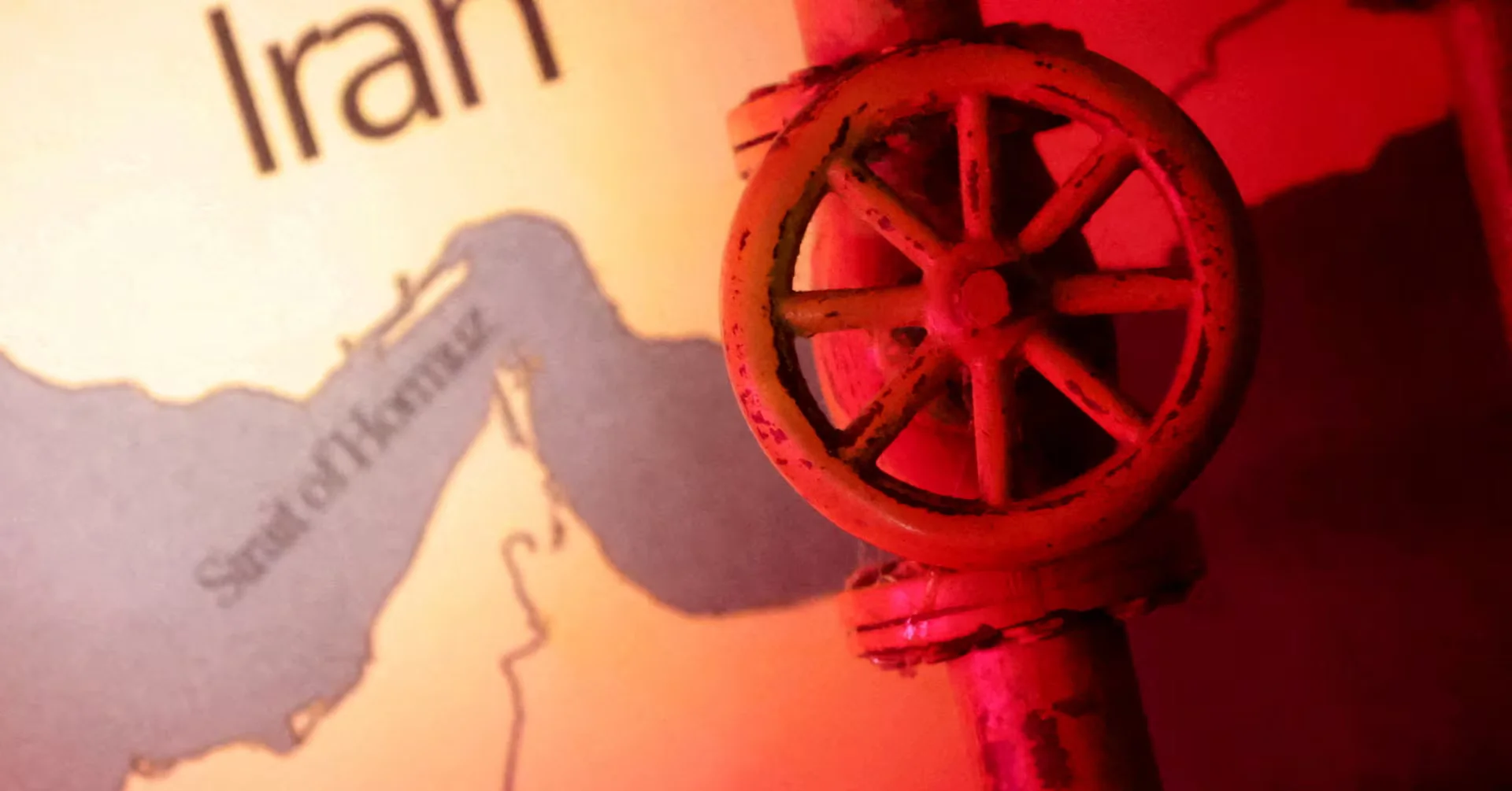
The narrow Strait of Hormuz, a 21-mile wide waterway separating Iran from the Arabian Peninsula, has suddenly become the most critical financial flashpoint in global markets. As tensions between Iran, the United States, and Israel escalate, this crucial passage—responsible for transporting 20-30% of the world's oil and gas supplies—faces unprecedented disruption threats that could send crude prices soaring to $130 per barrel and reshape investment portfolios across every asset class. For investors monitoring the fallout, understanding the Strait's strategic importance isn't just geopolitical awareness—it's essential financial risk management in a world where energy security increasingly dictates market performance.
How the Hormuz Crisis Unfolded: Inside the Oil Market Earthquake
The current crisis represents a perfect storm of geopolitical tension and market vulnerability. According to Al Jazeera's analysis, the Strait of Hormuz serves as the primary transit route for approximately 21 million barrels of oil daily, along with significant volumes of liquefied natural gas (LNG). When Iranian forces recently declared the waterway "closed for shipping" in response to U.S.-Israeli military actions, the immediate market reaction was both swift and severe. Brent crude prices jumped 13% in a single trading session, briefly crossing the psychologically important $80 per barrel threshold for the first time since 2024.
What makes this situation particularly dangerous for investors is the convergence of multiple risk factors. Shipping analysts at Seatrade Maritime warn that a full blockade could push oil prices to $130 per barrel—matching the all-time highs witnessed during the 2007–2008 oil shock. Meanwhile, insurance premiums for tankers attempting the passage have skyrocketed by 400-500%, creating what industry experts call a "de facto blockade" as commercial operators increasingly avoid the route altogether. The financial implications extend far beyond energy markets, with Goldman Sachs strategists estimating that traders now demand about $14 more per barrel than before the conflict began—a risk premium that ultimately filters through to consumers and corporate balance sheets worldwide.
Timeline: How the Hormuz Crisis Developed Over Recent Weeks
The road to current market turmoil began with a series of escalating events that analysts had warned about for years but markets had largely priced as low-probability risks. In late February 2026, U.S. and Israeli strikes on Iranian nuclear facilities triggered a rapid deterioration in regional security. By March 1, Iran's Revolutionary Guard Corps announced it would "make the Strait of Hormuz unsafe for commercial traffic" unless military operations ceased—a threat that immediately translated into market panic.
Within 48 hours, Qatar took the unprecedented step of suspending its LNG exports through the strait, marking the first time the world's largest LNG exporter had voluntarily halted shipments. By March 3, shipping traffic through the critical passage had dropped by approximately 70% according to maritime tracking data, as insurers either refused coverage or demanded premiums that made commercial transit economically unviable. The culmination came on March 4 when Brent crude briefly touched $82.37 per barrel—a level not seen in nearly two years—before settling slightly lower amid reports that diplomatic channels remained open. This sequence demonstrates how quickly geopolitical events can translate into tangible market movements, catching many investors unprepared for the speed of price adjustments.
Why the Strait of Hormuz Matters: Expert Analysis and Market Impact
The financial ramifications of the Hormuz crisis extend far beyond simple oil price movements. Morgan Stanley's research team identifies three primary transmission channels through which the disruption affects global markets: direct energy cost inflation, secondary inflation through supply chains, and reduced consumer spending power. Their analysis suggests that protracted supply disruptions could lift U.S. gasoline prices by 15-25%, potentially adding 0.3-0.5 percentage points to headline inflation at a time when central banks are already grappling with stubborn price pressures.
For emerging markets, the stakes are even higher. Reuters reports that a mere 10% increase in oil prices can deteriorate current account balances in vulnerable economies by 40-60 basis points, potentially triggering currency crises and capital flight. Countries like India, which imports over 80% of its oil needs, face particularly acute pressure as their trade deficits widen and currency reserves come under strain. Meanwhile, energy-exporting nations in the Gulf region confront a paradoxical situation: while higher prices boost government revenues, the physical disruption of export routes threatens their ability to capitalize on the price spike.
The investment implications are equally complex. Traditional energy sector investments might seem like obvious winners, but the situation is nuanced. While integrated oil majors with diversified production bases stand to benefit from higher prices, pure-play exploration companies with assets concentrated in the region face operational risks. Similarly, transportation and logistics stocks face headwinds from higher fuel costs, while renewable energy companies may see increased interest as investors seek alternatives to fossil fuel volatility. According to analysts at Barclays, the crisis could accelerate energy transition investments by 12-18 months as corporations and governments seek to reduce exposure to Middle Eastern supply risks.
Where Things Stand Now: Latest on Oil Markets and Investor Sentiment
As of the latest trading sessions, oil markets remain in a state of heightened alertness. Brent crude continues to trade in the $78-82 range, representing a risk premium of approximately $12-16 per barrel compared to pre-crisis levels. The physical market tells an even more dramatic story: spot premiums for Middle Eastern crude delivered to Asia have surged to multi-year highs, while time charter rates for Very Large Crude Carriers (VLCCs) have doubled as traders scramble to secure alternative shipping routes.
Investor positioning reflects the uncertainty. CFTC data shows that managed money net long positions in crude oil futures have increased by 32% over the past two weeks, indicating that speculative investors are betting on continued price strength. However, open interest in put options (bearish bets) has also risen significantly, suggesting that institutional investors are hedging against potential diplomatic breakthroughs that could trigger a rapid price correction. This bifurcated positioning creates the conditions for extreme volatility, with market technicians noting that Brent crude faces technical resistance around the $85 level—a breach of which could trigger algorithmic buying programs and push prices toward the $90-95 range.
What Happens Next: The Road Ahead for Energy Investments
The future trajectory of the Hormuz crisis depends on several variables that investors should monitor closely. Diplomatic efforts between Washington, Tehran, and regional powers will determine whether the current impasse escalates toward actual military conflict or de-escalates toward negotiated solutions. Market analysts assign approximately 60% probability to a "managed tension" scenario where shipping continues at reduced levels with elevated insurance costs, 25% probability to rapid de-escalation, and 15% probability to full-scale blockade requiring military intervention.
For portfolio positioning, diversification becomes paramount. Energy sector allocations should consider not just traditional oil and gas equities but also midstream infrastructure companies, alternative energy providers, and commodities beyond petroleum. Fixed income investors need to reassess exposure to emerging market sovereign debt, particularly in oil-importing nations with limited fiscal space to absorb energy shocks. Currency markets will likely see continued strength in commodity-linked currencies (CAD, NOK, RUB) relative to those of major oil importers (INR, TRY, ZAR).
Perhaps most importantly, the crisis serves as a stark reminder that geopolitical risk management must become integrated into investment processes rather than treated as an external variable. As the International Energy Agency noted in its recent emergency assessment, "The Strait of Hormuz disruption underscores the fragility of global energy interdependence and the need for investors to price geopolitical premiums into asset valuations across multiple sectors."
The Bottom Line: Key Investment Takeaways from the Hormuz Crisis
The Strait of Hormuz situation represents more than just another Middle Eastern conflict—it's a fundamental reassessment of global energy security with profound investment implications. First, recognize that 20-30% of global oil supplies pass through this narrow waterway, creating systemic risk that cannot be diversified away through traditional portfolio construction alone. Second, understand that oil price shocks transmit rapidly through inflation channels to impact monetary policy, interest rates, and ultimately equity valuations across all sectors. Third, consider that emerging markets face disproportionate vulnerability, requiring careful reassessment of exposure to countries with high oil import dependency. Finally, view the crisis as accelerating structural trends toward energy diversification, supply chain resilience, and alternative energy adoption—themes that will likely shape investment opportunities for years beyond the immediate geopolitical resolution.
As markets navigate this period of elevated uncertainty, the investors best positioned will be those who recognize that the Strait of Hormuz isn't just a geographic location—it's a financial variable that now demands explicit consideration in every asset allocation decision. The waterway's strategic importance ensures that its fate will continue to ripple through portfolios long after headlines fade, making informed understanding of its dynamics not just prudent but essential for capital preservation and growth in an increasingly interconnected global economy.